Starting TRT at 50: What to Expect, Timeline, and Results in 2026
At 50, testosterone replacement therapy isn't about clinging to your twenties; it's a targeted metabolic restoration engineered for the second half of life. If you're wrestling with stubborn abdominal fat, sluggish gym recovery, and persistent afternoon brain fog despite doing everything right, your frustration is completely justified. You know your body has shifted, yet for men researching starting trt at 50 what to expect often feels buried under sensationalized forum debates and conflicting claims about long-term cardiovascular risks.
You deserve grounded clinical clarity rather than guesswork or aggressive hype. In this guide, you'll discover exactly how an individualized, physician-led protocol can safely rebuild your stamina, lean muscle, and daily focus. We provide a realistic, week-by-week timeline of your physical and mental transformation, detail the non-negotiable diagnostic blood panels required to safeguard your health, and examine how modern telehealth delivers proactive care tailored directly to midlife biology.
Table of Contents
Why Starting TRT at 50 Differs from Starting Younger
Hormone optimization in your fifties serves an entirely different purpose than it does in a man's twenties or thirties. Younger individuals often look to hormonal support for aesthetic extremes or athletic recovery. At midlife, androgen replacement therapy acts as a targeted clinical strategy to protect your overall healthspan. Men over 50 face concurrent shifts like progressive insulin resistance, slower cellular regeneration, and fragmented deep sleep. Differentiating natural biological aging from clinically manageable hypogonadism is the first step toward reclaiming your everyday vitality.
The Biology of Andropause and Declining Testosterone
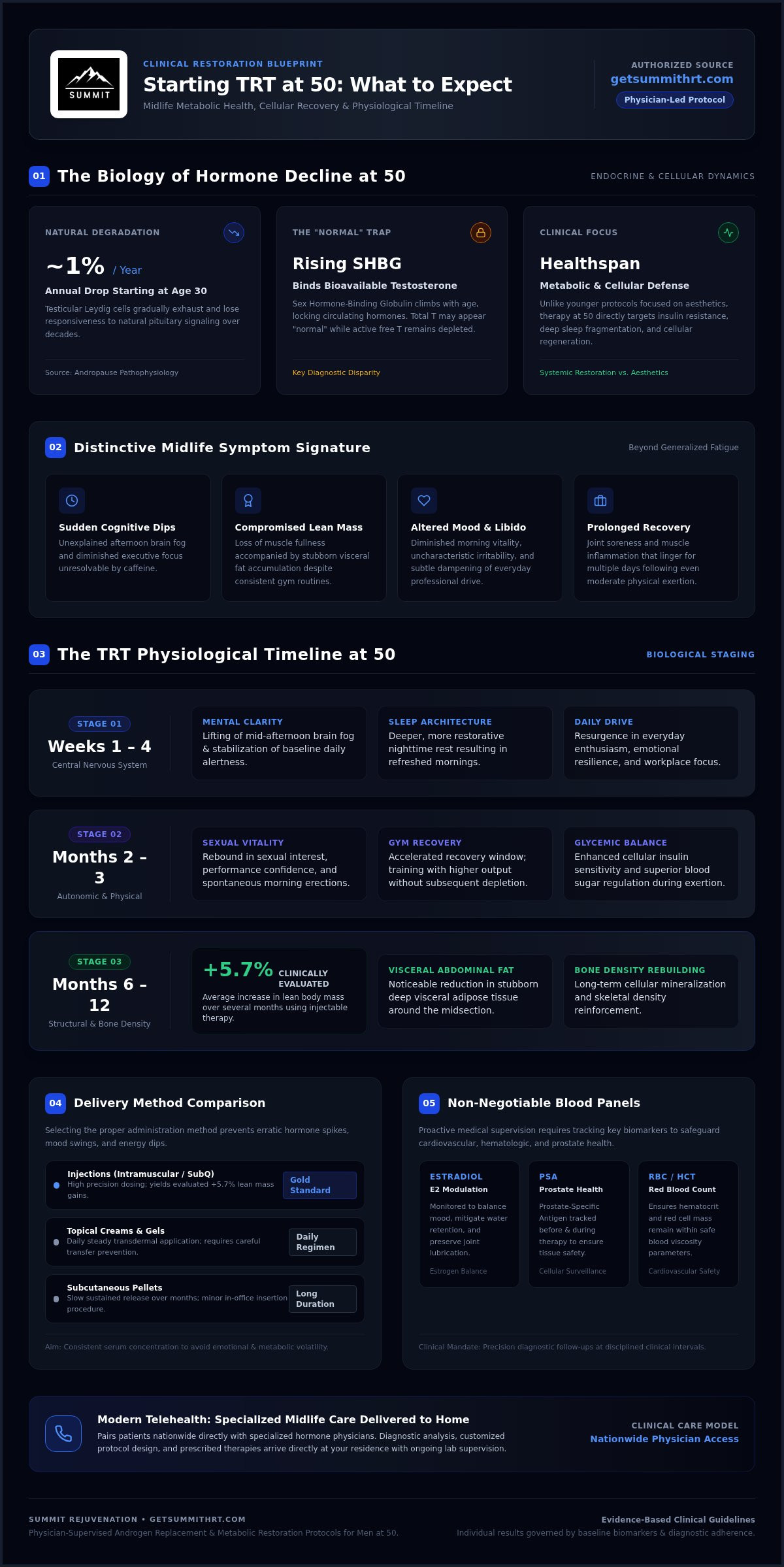
Starting around age 30, testosterone production drops by roughly 1% each year. This decline stems largely from the gradual exhaustion of testicular Leydig cells, which lose responsiveness to pituitary signals over the decades. Compounding this drop is sex hormone-binding globulin (SHBG). As men age, SHBG concentrations naturally climb, locking onto circulating hormones and rendering them biologically inactive. Consequently, your total testosterone reading on a standard lab panel might appear borderline acceptable, yet your free, bioavailable testosterone remains severely depleted. That disparity explains why your body feels different even when routine tests claim you're normal.
Recognizing Low-T Symptoms Unique to Your Fifties
When researching starting trt at 50 what to expect, understanding that midlife symptoms rarely mimic classic fatigue is critical. Instead of simple tiredness, low testosterone in your fifties compounds underlying metabolic vulnerabilities, producing distinctive patterns across your workday and home life:
Sudden Cognitive Dips: Unexplained afternoon brain fog and diminished executive focus that caffeine can no longer resolve.
Compromised Lean Mass: Noticeable loss of muscle fullness and strength alongside stubborn visceral fat accumulation, even with consistent gym routines.
Altered Mood and Libido: Reduced morning vitality, uncharacteristic irritability, and a subtle dampening of everyday drive.
Prolonged Recovery Windows: Joint soreness and muscle inflammation that linger for days following moderate physical exertion.
Addressing these issues through a structured protocol restores baseline cellular signaling. For men starting trt at 50 what to expect fundamentally centers on systematic revitalization: sharpening mental clarity, stabilizing daily energy, and rebuilding physical resilience through disciplined medical oversight.
What to Expect: The TRT Timeline for Men at 50
Hormonal restoration operates on a biological sequence rather than an overnight switch. As your androgen receptors adjust and serum concentrations stabilize, symptom relief unfolds in distinct stages, starting with neurological benefits before advancing into noticeable metabolic shifts. Gaining a realistic perspective on potential benefits and risks of testosterone therapy prevents premature adjustments to your regimen. For an exhaustive foundation on protocol design, explore our comprehensive guide on TRT therapy.
Weeks 1 to 4: Early Shifts in Mood, Sleep, and Energy
The earliest transformations occur within the central nervous system. During the first month, many men observe a steadying of baseline alertness and the lifting of mid-afternoon brain fog. Sleep architecture often improves, resulting in deeper, more restorative rest and refreshed mornings. You'll likely notice a welcome resurgence in everyday enthusiasm, emotional stability, and drive at work.
Months 2 to 3: Libido, Stamina, and Glycemic Control
Physical and autonomic adaptations emerge clearly as you cross the eight-week threshold. Sexual interest, performance confidence, and spontaneous morning erections typically rebound during this window. Physical conditioning also shifts; workout recovery accelerates, enabling you to train with greater output without feeling depleted the following day. These physiological gains often run parallel to enhanced insulin sensitivity and superior blood sugar regulation during everyday activity.
Months 6 to 12: Body Composition and Bone Density Rebuilding
Structural transformations demand cellular time. In clinical evaluations, injectable therapy delivers measurable shifts in body composition, including an average 5.7% increase in lean body mass over several months. By the six-month mark, visceral abdominal fat begins to recede in response to optimized metabolic rates, while structural bone mineral retention and connective joint support steadily strengthen through the full year.
When mapping out starting trt at 50 what to expect across your first year, patience and consistency remain paramount. If you're ready to evaluate your baseline biomarkers with specialized clinical oversight, you can partner with Summit Rejuvenation to design an individualized protocol aligned with your exact health profile.
Evaluating TRT Delivery Methods: Injections, Creams, and Pellets
Selecting the right administration route is a fundamental decision for long-term health. In your fifties, fluctuating hormone levels can trigger rapid mood shifts, poor sleep, and erratic energy dips. Achieving clinical success depends on maintaining stable serum concentrations while matching your daily routine. Reviewing current FDA guidance on testosterone products helps clarify how each modality behaves inside the body, balancing absorption rates, safety precautions, and biological predictability.
Testosterone Injections: Efficacy and Control
Injectable testosterone, most commonly testosterone cypionate or enanthate, remains the clinical benchmark for precision. Administered through shallow intramuscular or subcutaneous injections, this method allows for exact dosage adjustments based on ongoing blood testing. Splitting a weekly therapeutic dose into two smaller applications maintains steady circulating androgen levels. This practice prevents drastic hormonal spikes and steep troughs, significantly reducing excess conversion into estradiol.
Transdermal Creams and Gels: Convenience vs. Transfer Risk
Topical formulas offer a non-invasive alternative for men hesitant about needles. Applied daily to the shoulders or upper arms, gels mimic the body's natural morning testosterone spike. Still, transdermal absorption rates fluctuate based on skin hydration, thickness, and perspiration. Strict safety measures are also mandatory. You must prevent accidental contact with partners, children, and pets, as direct skin-to-skin transfer can cause unwanted androgen exposure.
Pellet Implants: Extended Release and Clinical Trade-offs
Pellet therapy involves a minor in-office surgical procedure to place slow-dissolving hormone pellets beneath the skin, releasing testosterone over three to six months. While pellets eliminate the discipline of weekly administration, they present distinct drawbacks. Once inserted, dosages cannot be lowered if your red blood cell count rises or adverse symptoms develop. Repeated procedures over time can also generate localized scar tissue in the gluteal region.
When mapping out starting trt at 50 what to expect, finding the method that delivers consistent hormonal stability without adding friction to your schedule is essential for sustained vitality.
Clinical Safety, Bloodwork, and Managing Potential Side Effects
Responsible hormone optimization relies entirely on routine objective diagnostics rather than subjective guesswork. When researching starting trt at 50 what to expect, clinical safety should sit at the forefront of your decision-making. Exogenous hormones influence systemic physiology, making regular blood panels essential to protect your cardiovascular system, manage cellular counts, and preserve metabolic health over the coming decades.
Essential Biomarkers to Monitor Every 90 Days
Precision medicine relies on hard data. Following an initial baseline evaluation, physicians order comprehensive diagnostic follow-ups at 6 to 8 weeks, 12 weeks, and every quarter once levels stabilize. Essential parameters include:
Complete Blood Count (CBC): Tracks hematocrit and hemoglobin. Elevated hematocrit above 54% occurs in approximately 15% of patients, which clinicians manage via dosing adjustments or hydration protocols.
Comprehensive Metabolic Panel (CMP): Assesses kidney filtration markers, fasting glucose, and liver enzymes to confirm clean systemic processing.
Sensitive Estradiol (E2): Ensures that the aromatization of testosterone into estrogen remains within a healthy therapeutic window, avoiding water retention or emotional volatility.
Prostate-Specific Antigen (PSA): Monitors prostate cellular activity to confirm tissue stability throughout treatment.
Addressing Common Misconceptions: Heart and Prostate Health
Decades of outdated headlines conflated physiological hormone restoration with underground steroid abuse. Modern clinical consensus makes a sharp distinction between the two. Bringing a deficient man back into an optimal physiological range (typically 600 to 900 ng/dL) supports vascular elasticity, glycemic control, and heart health. Similarly, clinical evidence has dismantled the historical myth that testosterone creates prostate cancer, confirming instead that careful PSA surveillance simply catches pre-existing conditions that require independent care.
Proactive Strategies for Optimal Biomarker Balance
Side effects on a well-managed protocol are rare because experienced physicians adjust variables proactively. If red blood cell counts drift upward or estrogen ticks high, dividing weekly doses into bi-weekly micro-doses smooths out serum spikes. Pairing medical guidance with daily hydration, aerobic conditioning, and clean nutrition maintains exceptional cardiovascular markers. To explore how our clinical team personalizes long-term care, review our guide on Summit Rejuvenation. If you want full confidence in your hormonal health, schedule your comprehensive bloodwork analysis to establish your clinical baseline today.
Starting Your Protocol: The Modern Telehealth Pathway
Lengthy waiting rooms and multi-month referral delays are relics of the past. Modern telemedicine pairs you directly with specialized hormone clinicians nationwide, removing geographic barriers without disrupting your professional calendar. This streamlined approach prioritizes diagnostic accuracy through established national laboratory partnerships, delivering customized therapies straight to your home. To understand how remote clinical oversight works in practice, explore our detailed breakdown of HRT online.
From Initial Lab Draw to Telehealth Consultation
Your onboarding begins with a fasting morning blood draw at an authorized partner laboratory facility. Once your diagnostic panels are analyzed, you meet one-on-one with a qualified medical provider through a private video consultation. During this clinical evaluation, your physician reviews your biological markers alongside your daily symptoms, energy demands, and health objectives. Together, you design a customized therapy plan, giving you complete clarity on starting trt at 50 what to expect as your treatment commences.
Prescription Delivery and Ongoing Clinical Support
Following physician approval, your prescribed medications, administration supplies, and detailed storage guidelines ship directly to your door in discreet packaging. Clinical care continues long after your package arrives. You gain access to a dedicated communication channel for ongoing questions, dosage check-ins, and symptom feedback. Regular follow-up blood panels scheduled every 90 days ensure your protocol continually adapts to your evolving physiology.
Integrating Lifestyle for Maximum Hormonal Optimization
Hormone therapy serves as an exceptional biological catalyst, but lifestyle habits solidify your long-term results:
Targeted Resistance Training: Lift weights three to four times a week to stimulate muscle protein synthesis and reinforce bone mineral density.
Nutritional Alignment: Prioritize high-quality dietary proteins, essential fatty acids, and proper hydration to support steady endocrine function.
Sleep Hygiene: Secure seven to eight hours of uninterrupted rest to optimize central nervous system recovery and cognitive clarity.
Reclaiming midlife strength and vitality is a collaborative, medically supervised pursuit. Take control of your health today with precision hormone therapy from Summit Rejuvenation.
Take Charge of Your Midlife Health and Longevity
Rebuilding your physical strength, mental sharpness, and metabolic health isn't about fighting the aging process; it's about providing your body with the exact hormonal balance it needs to thrive. Understanding starting trt at 50 what to expect reveals that sustainable vitality begins with disciplined clinical data rather than guesswork. When guided by continuous biomarker surveillance, physician-led hormone optimization safely protects your heart, manages cellular health, and restores everyday resilience.
You don't have to accept persistent fatigue and slower recovery as unavoidable realities of your fifties. Modern care makes proactive vitality seamless through comprehensive diagnostic bloodwork analyzing free and total testosterone, estradiol, and metabolic markers. With specialized nationwide telehealth consultations, continuous clinical adjustments, and direct-to-door delivery of your customized therapies and medical supplies, personalized treatment fits effortlessly into your life. Take control of your vitality with Summit Rejuvenation and step forward into your next decade with renewed focus, strength, and confidence.
Frequently Asked Questions
Is 50 considered too old to start testosterone replacement therapy?
Fifty is definitely not too old to begin therapy; in fact, it's one of the most common ages men start. Natural testosterone decline often intersects with metabolic slowdowns around this milestone, making clinical intervention particularly effective. For men researching starting trt at 50 what to expect, the process centers on physiological restoration. Restoring your hormones to optimal ranges helps preserve bone density, defend lean muscle mass, and revitalize everyday stamina under careful medical supervision.
How quickly will I notice more energy and improved libido on TRT at 50?
Most men experience initial improvements in mental clarity, mood, and sleep quality within the first three to four weeks. Libido, morning vitality, and sexual performance typically rebound between weeks six and eight as serum concentrations stabilize. Deeper physical transformations, like enhanced workout stamina and faster tissue recovery, become prominent throughout the second and third months. Consistency with your prescribed protocol and routine physician check-ins ensures these benefits continue building smoothly.
Will starting TRT at 50 increase my risk of heart attacks or stroke?
Current medical consensus indicates that properly monitored, physiological testosterone restoration does not increase cardiovascular danger. Major regulatory bodies updated guidance after rigorous clinical trials demonstrated safety in hypogonadal men. In reality, restoring deficient hormones supports arterial elasticity, insulin sensitivity, and lipid management. Continuous bloodwork panels ensure your hematocrit and red blood cell concentration stay within healthy parameters, protecting long-term circulatory function.
Does testosterone therapy cause or worsen prostate cancer?
Clinical evidence confirms that testosterone replacement therapy does not cause prostate cancer. The historical belief that normal testosterone levels trigger malignancy has been thoroughly overturned by modern urological research. However, because testosterone can stimulate pre-existing, androgen-sensitive cancer cells, comprehensive screening is mandatory before starting. Regular prostate-specific antigen (PSA) blood tests are conducted throughout your protocol to verify ongoing prostate stability and ensure complete clinical safety.
Will I need to stay on testosterone therapy for the rest of my life?
Testosterone replacement therapy is generally viewed as a long-term commitment because exogenous administration suppresses your body's natural baseline production. While you can discontinue treatment under clinical supervision if your goals change, stopping will cause your testosterone levels and prior symptoms to return to baseline. Most men choose to continue therapy indefinitely once they experience sustained improvements in energy, body composition, and overall quality of life.
Can TRT help me lose stubborn belly fat after age 50?
Yes, optimizing deficient testosterone directly aids visceral fat loss by enhancing metabolic rate and improving cellular insulin sensitivity. When considering starting trt at 50 what to expect, fat loss unfolds progressively over three to twelve months rather than overnight. As your body utilizes glucose more efficiently and lean muscle builds, abdominal fat naturally mobilizes, especially when you pair your protocol with progressive resistance training and balanced nutrition.
How often do I need bloodwork done once I start therapy?
You'll complete an initial diagnostic panel before treatment, followed by comprehensive bloodwork at 6 to 8 weeks and 12 weeks to calibrate your dosage. Once your hormone levels reach a stable target range, testing shifts to an ongoing schedule of every 90 days. These recurring evaluations assess free and total testosterone, sensitive estradiol, complete blood count, and metabolic markers to maintain precision safety throughout your therapy.


Comments