Self-Administering Testosterone Injections: The 2026 Guide to Precision Vitality
Holding a syringe for the first time shouldn't feel like a high-stakes gamble with your health. While it's natural to feel a surge of anxiety about air bubbles or hitting a nerve, the reality is that mastering your own protocol is the most empowering step you can take toward reclaiming your energy. This self-administering testosterone injections guide is designed to transform that initial hesitation into a routine of confident, precision care. You aren't just performing a medical task; you're taking direct control of your hormonal balance from the comfort of your home.
We understand that the choice between intramuscular and subcutaneous methods can feel confusing, especially when you're focused on avoiding pain. You deserve a process that's as seamless as the results it produces. By following this comprehensive walkthrough, you'll learn the exact techniques used by medical professionals to ensure consistent hormone levels and a virtually sensation-free experience. We'll break down the latest 2026 safety standards, clarify the best injection sites, and provide the step-by-step clarity you need to manage your health journey with total independence.
Table of Contents
Preparing Your Station: Supplies and Sterilization Protocols
Precision is your priority. Setting up a dedicated station helps you transition from feeling like a patient to acting as a proactive partner in your own health journey. Using this self-administering testosterone injections guide starts with organization; you need a well-lit, quiet workspace where you can focus without interruption. Before you even touch your supplies, wash your hands thoroughly with warm water and soap. Every successful protocol for Androgen replacement therapy relies on this foundation of cleanliness to ensure your safety and the effectiveness of the medication.
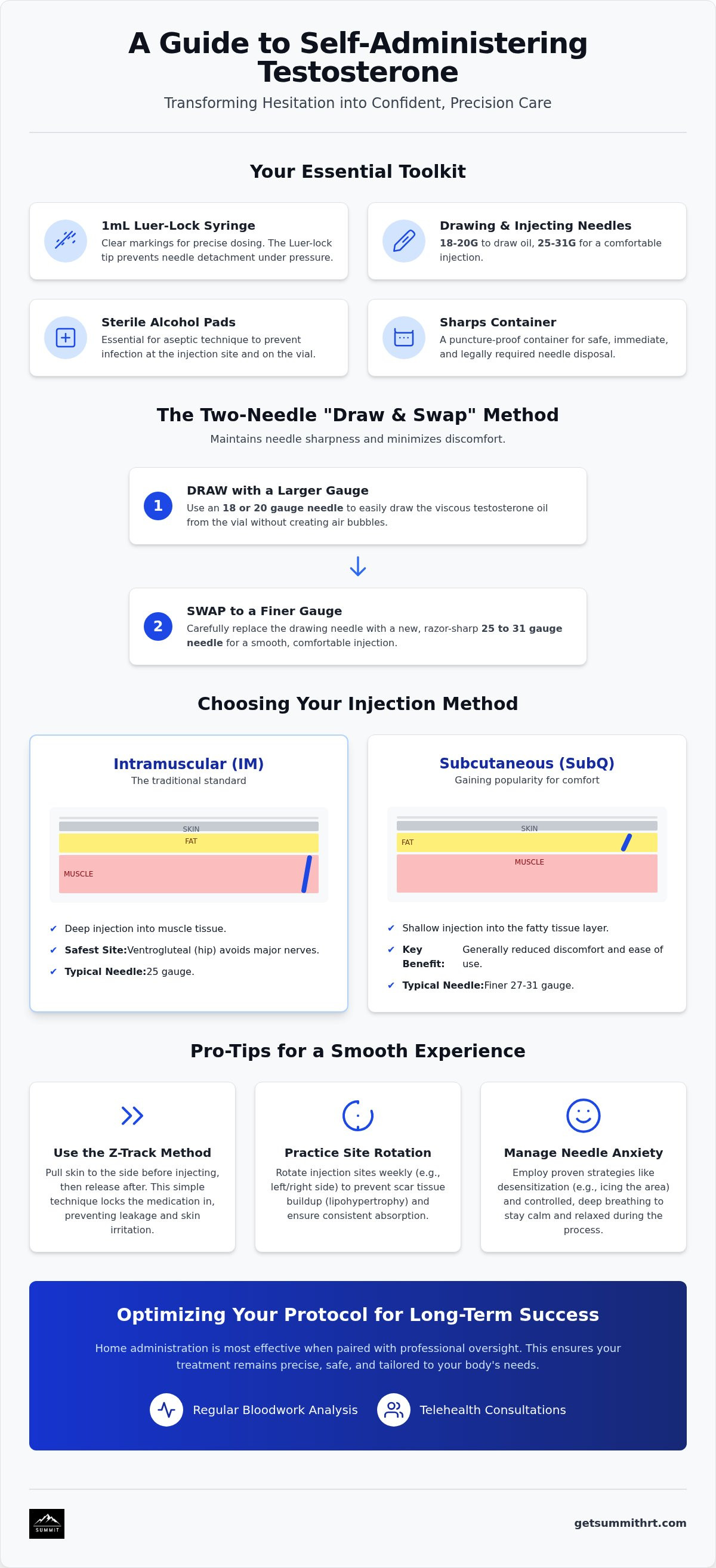
Your toolkit must include specific components designed to handle the unique viscosity of testosterone oils. Because testosterone is typically suspended in carrier oils like cottonseed or grapeseed oil, it's much thicker than water. You'll need a larger bore needle, usually 18 or 20 gauge, just for drawing the medication from the vial. Attempting to draw with a thin needle is frustrating and often leads to air bubbles. Once the syringe is filled, you'll switch to a much finer needle, typically 25 gauge for intramuscular or up to 31 gauge for subcutaneous, for the actual injection. This "draw and swap" method keeps the injection needle razor-sharp and minimizes discomfort.
The Essential Supply Checklist
Syringe Selection: Choose a 1mL syringe rather than a 3mL version if your dose is small. The 1mL size offers clearer markings, making it easier to hit your exact prescribed dose with total accuracy.
Luer-Lock Technology: Always use Luer-lock syringes where the needle screws onto the barrel. This prevents the needle from popping off under the pressure required to move thick oil through a fine gauge.
Sharps Disposal: A puncture-proof sharps container isn't just a safety tool; it's often a legal requirement. Keep it within arm's reach to dispose of needles immediately after use.
Sterilization: Avoiding Injection Site Infections
Aseptic technique is the specific process of maintaining sterility during a medical procedure to prevent the introduction of harmful bacteria or contaminants into the body. This begins with the 15-second rule. Use a fresh alcohol prep pad to scrub the rubber stopper of your testosterone vial for a full 15 seconds, then use a second pad to clean your skin at the injection site. Let the alcohol air dry completely; don't blow on it, as this introduces bacteria from your breath.
Maintaining a sterile field means the needle should never touch anything but the sterilized vial stopper and your cleaned skin. If the needle brushes against the table, your finger, or the outside of the vial, discard it immediately and start with a fresh one. It's a small price to pay for peace of mind. Finally, always verify your prescription label. Check the dose and the expiration date every single time you prepare your station. This habit ensures you're always following the most current guidance in your self-administering testosterone injections guide and maintaining the highest standards of care.
Choosing Your Injection Site: Intramuscular vs. Subcutaneous
Deciding where to deliver your medication is a pivotal moment in your treatment plan. Precision matters. Most patients find that their choice between Intramuscular (IM) and Subcutaneous (SubQ) methods comes down to personal comfort and the frequency of their doses. This self-administering testosterone injections guide highlights that while IM has been the traditional standard for decades, SubQ is gaining significant traction for its ease and reduced discomfort. Both methods are effective, but they interact with your tissues differently to provide the restoration you're looking for.
Site rotation is non-negotiable regardless of the method you choose. Injecting into the exact same spot every week leads to lipohypertrophy, which is the buildup of thickened fatty tissue, or the development of tough scar tissue. These issues don't just cause physical lumps; they can actively hinder how your body absorbs the testosterone. By rotating between your left and right sides and shifting the specific entry point by at least an inch each time, you ensure the tissue remains healthy and receptive. Healthy tissue means consistent results.
Intramuscular (IM) Landmarks
The ventrogluteal site, located on the side of the hip, is widely considered the safest IM location because it's far from major nerves and blood vessels. You can find it using the "V" method: place the palm of your hand over the greater trochanter and spread your fingers to create a V-shape. The vastus lateralis, or the outer third of your thigh, is another popular choice because it's easy to see while sitting down. For those with smaller injection volumes, the deltoid muscle in the shoulder is an option, though it requires a steady hand to ensure the needle remains perpendicular to the skin.
Subcutaneous (SubQ) Simplified
Subcutaneous injections involve delivering the medication into the fatty layer just beneath the skin. This method is often preferred by those who feel anxious about needles because it uses much shorter, thinner needles, often as small as 30-gauge. To perform this correctly, use the "pinch an inch" rule: gently grasp a fold of skin on your abdomen or thigh to pull the fat away from the underlying muscle. This ensures the medication stays in the adipose tissue where it belongs.
Many patients report that SubQ administration helps maintain steadier hormone levels. Because the medication is absorbed more slowly through fat than muscle, it can reduce the "peak and trough" effect where energy levels spike and then crash before the next dose. If you're looking for a more stable experience, discussing these options during your telehealth consultation can help you tailor your protocol to your specific lifestyle and goals.
Step-by-Step Guide to Self-Administering Testosterone
Execution is where your preparation meets your progress. Moving from the setup to the actual administration can feel like a significant hurdle, but following a methodical process removes the guesswork. This self-administering testosterone injections guide provides the clinical steps necessary to ensure your dose is accurate and your experience is as comfortable as possible. By focusing on the mechanics of the injection, you can minimize anxiety and focus on the restoration of your vitality.
Drawing and Priming the Syringe
Testosterone is a thick, oil-based medication. To draw it efficiently, you must first equalize the pressure in the vial. Draw back the plunger of your syringe to the mark of your prescribed dose, filling the barrel with air. Insert the draw needle into the vial and depress the plunger to inject that air. This creates a vacuum effect that helps the viscous oil flow into the syringe much faster. If you skip this, you'll find yourself struggling against a stubborn vacuum that makes precise dosing difficult.
Once you've drawn slightly more than your dose, look for air bubbles. Use the "flick and push" method: tap the side of the syringe firmly with your fingernail until the bubbles rise to the top, then gently push the plunger to expel the air and the excess medication until you hit your exact mark. Finally, swap your draw needle for your fresh injection needle. This ensures you're using a perfectly sharp tip that hasn't been dulled by the vial's rubber stopper, which is a key secret to a near-painless entry.
The Injection Procedure
If you're performing an intramuscular injection, use the Z-track technique to prevent medication from leaking back out. Use your non-dominant hand to pull the skin and underlying tissue about an inch to the side. Hold it firmly while you insert the needle at a 90-degree angle. Once the injection is complete and the needle is withdrawn, releasing the skin allows the tissue to slide back over the needle track, effectively sealing the testosterone deep within the muscle. For subcutaneous shots, a simple pinch of the fatty tissue is usually sufficient.
The Dart Motion: Insert the needle with a quick, firm motion. A slow, tentative entry actually triggers more pain receptors; a swift "dart" entry is often barely felt.
Controlled Delivery: Depress the plunger slowly and steadily. Because of the oil's thickness, rushing this step can cause unnecessary pressure and discomfort in the tissue.
Withdrawal and Care: Pull the needle straight out at the same angle it entered. Apply gentle pressure with a clean cotton ball or gauze for 30 seconds. Don't rub the site, as this can irritate the tissue.
Immediately drop your used needle and syringe into your sharps container. Take a moment to monitor the site for any immediate redness or swelling. While a tiny drop of blood or a small amount of clear fluid is normal, your goal is a clean, dry site. With each successful session, your confidence will grow, turning this medical necessity into a seamless part of your self-care routine.
Overcoming Injection Anxiety and Troubleshooting Common Issues
Anxiety is a physical response, not a lack of willpower. Acknowledging that needle phobia is common helps strip away the stigma often associated with self-care. This self-administering testosterone injections guide aims to equip you with the mental tools needed to move past that initial hesitation. Most patients find that the anticipation of the poke is far more intense than the sensation itself. By reframing the process as a tool for restoration rather than a clinical chore, you can reclaim control over your health journey.
Managing Needle Phobia
Numbing the skin with ice for sixty seconds before you begin can significantly dull the entry sensation. Similarly, using a vibration device held near the injection site can confuse your nerves, effectively blocking pain signals before they reach the brain. The "cough trick" involves a single, sharp cough exactly at the moment of entry; this serves as a powerful mental distraction that bypasses the pain response. Over time, the power of routine will desensitize your response. What feels daunting today will eventually become a mundane five-minute task. By following a self-administering testosterone injections guide consistently, you're building the confidence necessary for long-term success.
Post-injection pain, often called PIP, is a common occurrence that usually feels like a mild bruise or the soreness following a flu shot. This is typically just the muscle reacting to the volume of the oil. If you happen to hit a small vein, you might see a bit more bleeding or develop a minor bruise; don't panic, simply apply firm pressure for a full minute. It's also vital to distinguish between a localized reaction to a carrier oil, which might cause an itchy bump, and a true infection. Allergic reactions to oils like cottonseed or grapeseed are rare but manageable with a protocol adjustment.
When to Contact Your Medical Team
While minor soreness is expected, certain red flags require professional attention. Contact your provider if you experience a fever, spreading redness that feels hot to the touch, or extreme swelling that doesn't subside within forty-eight hours. If you accidentally miss a dose, don't double up; instead, follow the specific guidance provided by your telehealth medical team to get back on track safely. Aspirating is the act of pulling back on the syringe plunger after the needle is inserted to ensure no blood enters the barrel; however, modern clinical guidelines often omit this step for the gluteal and thigh sites used in TRT because the risk of hitting a major vessel is exceedingly low. Consistent monitoring through bloodwork remains your best defense against complications.
Optimizing Your TRT Protocol with Professional Oversight
Self-administration offers a level of convenience that traditional clinic visits simply cannot match. However, the true power of this model lies in the professional oversight that happens behind the scenes. While you handle the physical delivery of your medication, our medical team handles the data. This self-administering testosterone injections guide is a tool for delivery, but your progress is measured through consistent, high-level diagnostics. Utilizing telehealth allows you to bridge the gap between the comfort of your home and the expertise of a specialized clinic, ensuring your protocol remains both safe and effective.
The Importance of Regular Bloodwork
Bloodwork is the compass that guides your journey. It's impossible to optimize your health based on how you feel alone; we need hard data to understand your unique biological response. We monitor critical markers including total and free testosterone, estradiol, and hematocrit to ensure your body is processing the therapy correctly. This data-driven approach is why TRT therapy is never a one-size-fits-all solution. Every individual absorbs and metabolizes hormones differently.
Adjusting your dose without clinical data is dangerous and counterproductive. If you experience a plateau or a shift in symptoms, the answer isn't to guess with your syringe. The answer is to look at the numbers. The synergy between your diligent self-administration and our professional diagnostic tracking creates a safety net that traditional care often lacks. We use your results to fine-tune your prescription, ensuring you stay within the optimal therapeutic window for your body.
Reclaiming Your Vitality
Mastering the skills in this self-administering testosterone injections guide marks your transition from a passive patient to a proactive health advocate. Maintaining stable hormone levels through consistent self-injection prevents the energy crashes often associated with infrequent clinic-administered shots. This stability is the foundation of long-term vitality, allowing you to focus on your life rather than your next appointment. You're no longer just managing a condition; you're optimizing your performance.
At Summit Rejuvenation, we don't just provide medication. We provide a partnership. Our experts monitor your progress through regular labs and consultations, ensuring that your path to peak vitality is professionally managed every step of the way. You have the tools to manage the daily steps, and we have the expertise to ensure those steps are leading you toward your goals. Confidence comes from knowing you have a dedicated team backing your every move.
Ready to optimize? Schedule your comprehensive bloodwork with Summit Rejuvenation today.
Reclaiming Your Vitality Through Precision Care
Mastering your protocol is about more than just medical compliance; it's a commitment to your future self. By understanding the nuances of needle gauges, the benefits of site rotation, and the step-by-step mechanics of a sterile injection, you've equipped yourself with the knowledge to manage your health with total confidence. This self-administering testosterone injections guide serves as your foundation, but the true results come from the synergy of your daily routine and professional medical expertise.
You don't have to navigate this path alone. Our comprehensive model includes direct-to-home medication shipping, expert telehealth guidance for all your administration questions, and detailed bloodwork analysis to ensure your protocol is perfectly tailored to your biology. This combination of independence and expert oversight is the most efficient way to maintain stable hormone levels and achieve peak performance. We're here to ensure every part of your experience is professional, safe, and effective.
Your journey toward restoration starts with a single, confident step. You have the tools, the training, and the support needed to reclaim your vitality and live life at your highest potential.
Frequently Asked Questions
Is it better to inject testosterone into the muscle or under the skin?
Both methods are clinically effective, so the choice depends on your specific protocol and comfort level. Intramuscular injections are the traditional standard for deeper delivery. However, many patients using this self-administering testosterone injections guide prefer subcutaneous injections for frequent dosing. SubQ uses smaller needles and can lead to steadier hormone levels over time. Your medical team will help you decide which method aligns best with your biological response and lifestyle.
What happens if I get an air bubble in my testosterone syringe?
Small air bubbles in the syringe are generally not a safety risk for intramuscular or subcutaneous injections, but they can make your dose less accurate. If you notice bubbles, hold the syringe needle-up and use the "flick and push" method to move them to the top and expel them. Ensuring your dose is exact is a key part of maintaining consistent hormone levels throughout your treatment. Always double-check the barrel before proceeding with your injection.
Does self-injecting testosterone hurt?
Most patients experience only minimal discomfort that is comparable to a quick pinch or a routine vaccination. Using a fresh, sharp needle for the injection and applying a swift, dart-like motion significantly reduces the sensation. If you're concerned about pain, numbing the site with ice for sixty seconds beforehand can help. Following a proper self-administering testosterone injections guide ensures you use the correct technique to keep the process nearly sensation-free every single time.
How often should I rotate my injection sites?
You should rotate your injection sites every time you administer your medication to maintain healthy tissue. Never use the exact same spot twice in a row; instead, shift the entry point by at least one inch and alternate between the left and right sides of your body. This practice prevents the development of scar tissue and lipohypertrophy. Consistent rotation ensures that your body continues to absorb the testosterone efficiently and keeps the skin healthy for long-term therapy.
Can I reuse a needle if I only used it to draw the medication?
You should never reuse a needle, even if it was only used to draw medication from the vial. The rubber stopper on the vial dulls the needle tip significantly, which makes the actual injection much more painful and increases the risk of tissue trauma. Always swap your draw needle for a sterile, razor-sharp injection needle. This simple step is a hallmark of professional technique and ensures your home administration remains as comfortable and safe as possible.
What should I do if I see a drop of blood after my injection?
Seeing a small drop of blood or clear fluid after withdrawing the needle is perfectly normal and not a cause for alarm. This usually happens when the needle nicks a tiny capillary near the surface of the skin. Simply apply firm pressure with a clean cotton ball or gauze for about thirty seconds. Avoid rubbing the area, as this can cause irritation or bruising. If the bleeding persists, continue applying pressure until it stops completely.
How do I safely dispose of my used needles at home?
Used needles and syringes must be placed immediately into a puncture-proof sharps container to ensure home safety. If you don't have a medical-grade container, a heavy-duty plastic bottle with a screw-on lid can serve as a temporary alternative. Once the container is three-quarters full, seal it tightly and follow your local guidelines for medical waste disposal. Proper disposal protects you, your family, and sanitation workers from accidental needle sticks or exposure to medication.
Can I self-administer if I have a history of needle anxiety?
Yes, many patients with a history of needle anxiety successfully master the self-administration process through education and desensitization. Using tools like numbing creams, ice, or vibration devices can help bypass the pain response. Our telehealth team provides the encouraging support and professional oversight needed to help you build confidence. As the routine becomes familiar, the anxiety typically fades, allowing you to focus on the restoration of your energy and overall vitality.


Comments