Preventing Gynecomastia on TRT: What You Can Do in 2026
What if preventing gynecomastia on TRT isn’t about driving estrogen as low as possible, but about finding the right balance for your body? Breast tenderness or new fullness can feel alarming during treatment. It’s understandable to wonder whether testosterone is converting to too much estradiol, but an isolated lab result doesn’t tell the whole story. Automatically adding an estrogen-lowering medication may not be the right response.
You can take practical steps to reduce risk without making treatment decisions alone. This guide explains how aromatization may contribute to breast tissue changes, what symptoms to report, and how bloodwork and clinical monitoring can help your clinician assess what’s happening. You’ll also learn why treatment adjustments or medication may be considered in some cases, and why changing your dose or starting an estrogen blocker on your own can create new problems. A clear monitoring plan helps you raise concerns early and keep decisions grounded in your symptoms, lab results, and overall care.
Table of Contents
Preventing gynecomastia on TRT starts with understanding the change
Tenderness or a change in your chest while taking testosterone deserves attention, but it doesn’t automatically mean you need to stop TRT or start an estrogen-lowering medication. Preventing gynecomastia on TRT means noticing changes early and reviewing them with a clinician, not making treatment decisions based on worry alone.
Gynecomastia is growth of glandular breast tissue, while fat-related chest enlargement is an increase in fatty tissue. The two can look similar and may occur together, so appearance alone may not identify the cause. The overview of Gynecomastia describes the condition and its relationship to hormonal factors, but an individual change still needs clinical assessment.
What gynecomastia can look and feel like
Possible signs include tenderness or sensitivity near the nipple, or a firm, disc-like area beneath it. Changes may affect one breast or both, and experiences vary. These symptoms don’t confirm gynecomastia on their own. A clinician can examine the area and consider your health history and treatment to assess what may be causing the change.
Why prevention cannot be guaranteed
Risk and response can vary with individual health history and treatment factors. No lifestyle habit or medication can guarantee that breast tissue changes won’t occur. A new or progressing change is a reason to arrange clinical review rather than independently changing your dose or adding medication. For broader context on treatment planning and testosterone optimization, read the comprehensive TRT therapy guide.
Before your review, note when you first noticed the change, where it is, whether it feels tender, and whether it has progressed. Include any recent medication or treatment changes. These details can help your clinician interpret symptoms alongside relevant bloodwork and decide whether your TRT plan needs adjustment. A careful assessment supports individualized next steps.
How testosterone, estradiol, and aromatization relate to breast tissue
Testosterone and estradiol aren’t opposing hormones where one is useful and the other is automatically harmful. The body naturally makes both. An enzyme called aromatase converts some testosterone into estradiol, a hormone with important roles in normal physiology, including supporting bone health. This process happens in everyone, though the amount and its effects vary.
Because TRT changes testosterone exposure, it can also affect an individual’s hormone profile. But an estradiol result by itself can’t establish why breast tissue is changing or predict what will happen next. Estradiol is best interpreted alongside symptoms, treatment details, medical history, and the timing of the blood test.
What TRT may change in an individual hormone profile
People can respond differently to the same treatment. Dose, delivery method, individual physiology, and other health factors may all inform how a clinician interprets hormone results. The timing of a blood draw relative to a testosterone dose can matter because levels may vary over a treatment schedule. Share when you last took or received testosterone, and follow your clinician’s instructions about when to test. There isn’t one estradiol threshold that predicts breast changes for everyone.
Why automatic estrogen suppression is not a prevention plan
Trying to suppress estradiol simply because it appears on a lab report can miss the bigger picture. Estradiol has normal functions, and changing its levels without a clear clinical reason may affect other aspects of health. Aromatase inhibitors and other hormone-related medicines can have risks, so don’t start, stop, or change them on your own.
A safer decision considers the full context: what you’re experiencing, your test results and when they were collected, your medical history, and your TRT plan. Your clinician can review those details and decide whether monitoring or a treatment adjustment is appropriate. This individualized approach is central to preventing gynecomastia on TRT without assuming every hormone result needs correction.
If you’d like to discuss how symptoms and bloodwork fit into an individualized TRT plan, explore TRT care with Summit Rejuvenation.
Comparing practical ways to lower gynecomastia risk on TRT
For preventing gynecomastia on TRT, start with a clinician-led review, not a one-size-fits-all dose change or medication. Symptoms, treatment history, and appropriately timed bloodwork can help your clinician decide whether your plan needs attention. The right response depends on your circumstances, so an approach that may suit one patient isn’t a universal instruction.
Monitoring and treatment review versus self-directed changes
Keep a record of tenderness, the affected area, progression, and when symptoms occur in relation to treatment. Include the timing of your last dose when discussing bloodwork, since that context can help with interpretation. Changing a dose or schedule on your own may make it harder to understand what is driving a symptom or lab result. Contact the clinician managing your TRT to review concerns before changing treatment.
Risk reduction and treatment of established glandular tissue aren’t interchangeable. Monitoring and plan review can help identify concerns and guide decisions; existing tissue may need a separate assessment and discussion of treatment options. Don’t assume a prevention step will reverse a change that has already developed.
Lifestyle factors and what they can realistically do
Body composition can influence how the chest looks, but it can’t confirm whether enlargement is fat, glandular tissue, or both. Healthy habits may support general well-being, yet they aren’t a substitute for clinical assessment or individualized TRT care. If you notice a change, share it with your clinician rather than relying on supplements, weight loss, or exercise as prevention.
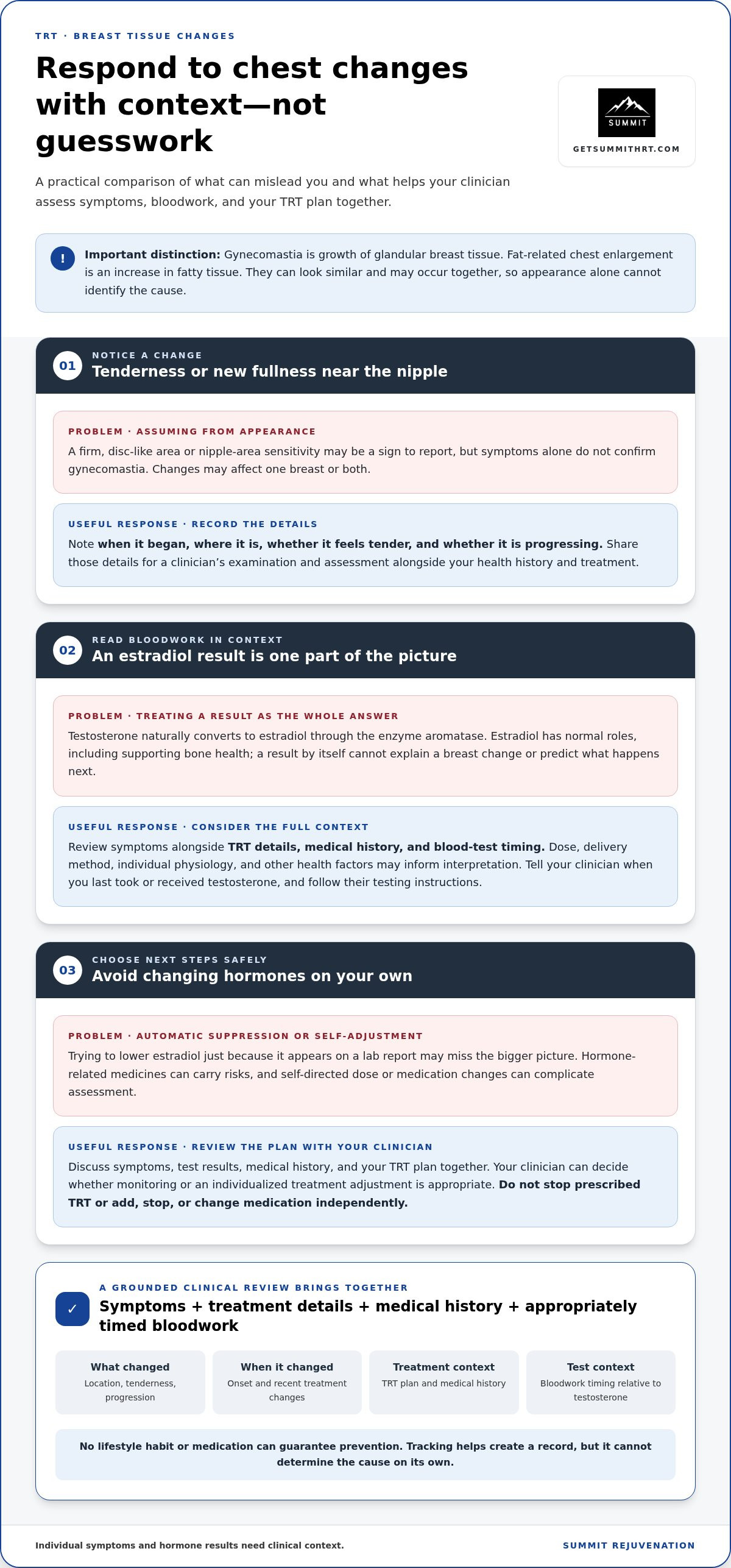
A step-by-step plan for preventing gynecomastia while on TRT
A clear record helps you explain what’s changed and helps your treating clinician decide what evaluation, if any, is appropriate. Use this practical plan:
Note when you first noticed the change. Record the date or approximate timing, and whether symptoms began after a treatment or medication change.
Describe what you feel and see. Note tenderness or pain, the location, whether one or both sides are affected, and whether the area seems stable or is progressing.
Gather relevant context. Bring a current list of prescriptions and supplements, along with your TRT dose and timing. Avoid repeatedly pressing or manipulating sensitive tissue, which can increase discomfort and make changes harder to assess.
Contact the clinician managing your TRT. Share your notes and ask how to proceed. They can determine whether an examination, blood tests, or further evaluation is appropriate. Don’t stop prescribed TRT or add medication on your own.
New or worsening breast changes deserve clinical review, even if they don’t automatically mean TRT must stop. A safe approach to preventing gynecomastia on TRT is to report the change and make decisions with your clinician rather than trying to diagnose or treat it yourself.
What to track and share at an appointment
Be specific about when symptoms began, how they’ve changed, and whether they affect one or both sides. Include treatment timing and any recent medication or supplement changes. These details give your clinician a clearer picture than a single observation, without repeated checking of a sensitive area.
When to seek prompt medical evaluation
Arrange timely clinical assessment for a new lump, persistent pain, nipple discharge, or progressive enlargement. If a change is rapid or feels particularly concerning, seek prompt medical advice rather than waiting for a routine follow-up. An examination can help distinguish gynecomastia from other breast or chest conditions; symptoms alone can’t establish the cause.
For concerns about TRT symptoms or how bloodwork fits into your treatment plan, schedule a TRT care discussion.
How clinician-guided TRT care supports prevention and next steps
There’s no guaranteed way to prevent every breast tissue change during TRT. A clinician-guided review can put your concerns into context and identify appropriate next steps. The assessment may consider your symptoms, medical history, current treatment, and relevant bloodwork together rather than relying on one lab value or symptom alone. Follow-up gives you an opportunity to discuss your response to treatment and raise new concerns. It supports informed care, not a promise that gynecomastia won’t occur.
What an individualized TRT review can consider
Bring a clear account of what you’ve noticed, when it began, and whether it’s changing. Your clinician can review that history alongside your treatment details and relevant test results, then decide whether additional assessment is appropriate. Summit Rejuvenation’s TRT care uses comprehensive bloodwork to support personalized treatment planning, giving you a structured way to discuss symptoms and lab findings without making unsupervised dose or medication changes.
For a broader overview of treatment planning and monitoring, read the guide to comprehensive TRT therapy.
How to prepare for a conversation about breast changes
Before your appointment, gather your symptom notes and a current list of prescriptions and supplements. Include relevant treatment timing, and describe the change plainly, such as tenderness near the nipple or a firm area you’ve noticed. This preparation can help keep the conversation focused and make it easier to review your concerns alongside your overall treatment plan.
Telehealth consultations can provide a convenient setting for ongoing care discussions when clinically appropriate. They don’t replace an in-person examination when one is needed, but they can help you review concerns and discuss next steps. Learn more in this telehealth hormone therapy guide.
Taking a concern seriously doesn’t mean assuming the worst. It means sharing changes early and making treatment decisions with clinical guidance. To learn more about personalized hormone care, explore Summit Rejuvenation’s care options.
Take the next step with a clear monitoring plan
Preventing gynecomastia on TRT starts with noticing and reporting changes, not automatically suppressing estrogen. Tenderness or enlargement can have different causes, so symptoms and lab results need to be interpreted together and in the context of your treatment and health history. Don’t change your dose or add medication on your own.
Keep a brief record of symptoms and treatment timing, then review it with the clinician managing your TRT. Comprehensive bloodwork can inform personalized hormone treatment planning, while follow-up offers a chance to discuss your response and concerns. Telehealth consultations can also support convenient conversations about ongoing care.
Explore personalized, bloodwork-supported TRT care with Summit Rejuvenation. Share your concerns and discuss next steps with a clinician as part of an individualized treatment plan.
Frequently Asked Questions
Can gynecomastia be prevented while taking TRT?
Risk may be reduced, but gynecomastia can’t be prevented in every person taking TRT. Preventing gynecomastia on TRT involves individualized monitoring and clinical review, not automatically lowering estradiol or changing your testosterone dose. Report new tenderness or enlargement, and discuss symptoms alongside treatment details and appropriately timed bloodwork. Don’t start medication or alter prescribed treatment on your own. Your clinician can help determine whether your plan needs review.
Does high estradiol always cause gynecomastia on TRT?
No, an elevated estradiol result doesn’t always mean you’ll develop gynecomastia. Hormone levels are only one part of the picture, and a lab result alone can’t diagnose the cause of breast symptoms or predict what will happen. A clinician considers symptoms, treatment timing, medical history, and test results together. Estradiol is a normal hormone with important functions, so it shouldn’t automatically be treated as harmful or suppressed.
Should I take an aromatase inhibitor to prevent gynecomastia on TRT?
Don’t take an aromatase inhibitor for prevention unless your clinician recommends it for your specific situation. These medicines affect estrogen production, and lowering estradiol without clinical guidance may create other concerns or obscure what’s causing symptoms. A clinician can consider your symptoms, treatment, history, and bloodwork before discussing options. Don’t use someone else’s medication or change a prescription based on one lab result or online advice.
What should I do if I notice breast tenderness while on TRT?
Contact the clinician managing your TRT and describe the tenderness, when it began, where you feel it, and whether it’s changing. Note any recent medication or treatment changes, too. Don’t repeatedly press the area to check it, and don’t stop testosterone or add medication without guidance. Your clinician can decide whether an examination, blood tests, or another evaluation is appropriate based on your symptoms and history.
Will gynecomastia go away if I stop testosterone?
Stopping testosterone doesn’t guarantee that gynecomastia will resolve, and you shouldn’t stop prescribed TRT without discussing it with your clinician. Breast changes can have causes beyond testosterone treatment, and the type and duration of tissue changes may affect what happens over time. A clinician can assess the change and review your treatment before recommending next steps. Don’t assume stopping therapy alone will identify or correct the cause.
Can weight loss prevent or reverse gynecomastia during TRT?
Weight loss may change the appearance of the chest if some enlargement is related to body fat, but it can’t reliably prevent or reverse growth of glandular breast tissue. Fat and glandular tissue can also be present together, so appearance alone may not clarify the cause. Healthy habits can support overall health, but they aren’t a substitute for assessment. Share new or persistent changes with your clinician rather than relying on weight loss alone.
When should I contact a clinician about breast changes on TRT?
Contact your clinician about new or worsening breast changes, especially a new lump, persistent pain, nipple discharge, or progressive enlargement. Seek prompt medical assessment for rapid changes or symptoms that concern you rather than waiting for a routine follow-up. These signs don’t establish a diagnosis, but an examination can help distinguish gynecomastia from other breast or chest conditions. Keep notes on timing and progression to support the discussion.


Comments