Optimizing Sleep Quality on HRT: A Practical, Evidence-Informed Guide
What if better sleep on HRT starts not with changing your hormones, but with understanding what’s waking you? If you’re focused on optimizing sleep quality on hrt, it can be discouraging when nights remain restless after treatment begins. Hormonal changes may contribute to sleep disruption, especially when hot flashes or night sweats are involved, but HRT doesn’t address every possible cause.
You’re right to ask whether your treatment, another health issue, or a mix of factors may be affecting your sleep. Evidence about sleep benefits varies, and the right approach depends on your symptoms, health history, and treatment plan. You don’t have to guess or make changes on your own.
This guide will help you assess what’s changing, track sleep alongside related symptoms, and consider other possible contributors, such as sleep apnea, thyroid conditions, anxiety, or depression. You’ll also learn what’s known, and what remains uncertain, about HRT and sleep, plus practical questions to bring to a qualified clinician before adjusting treatment.
Table of Contents
Why Sleep Can Change on HRT: Start With the Pattern, Not an Assumption
How HRT May Affect Sleep Quality: What the Evidence Can, and Cannot, Show
HRT, Sleep Habits, or Another Cause? Compare the Clues Before Changing Treatment
How to Improve Sleep Quality on HRT: A Step-by-Step Tracking Plan
When Sleep Remains Poor on HRT: Get an Individualized Clinical Review
Why Sleep Can Change on HRT: Start With the Pattern, Not an Assumption
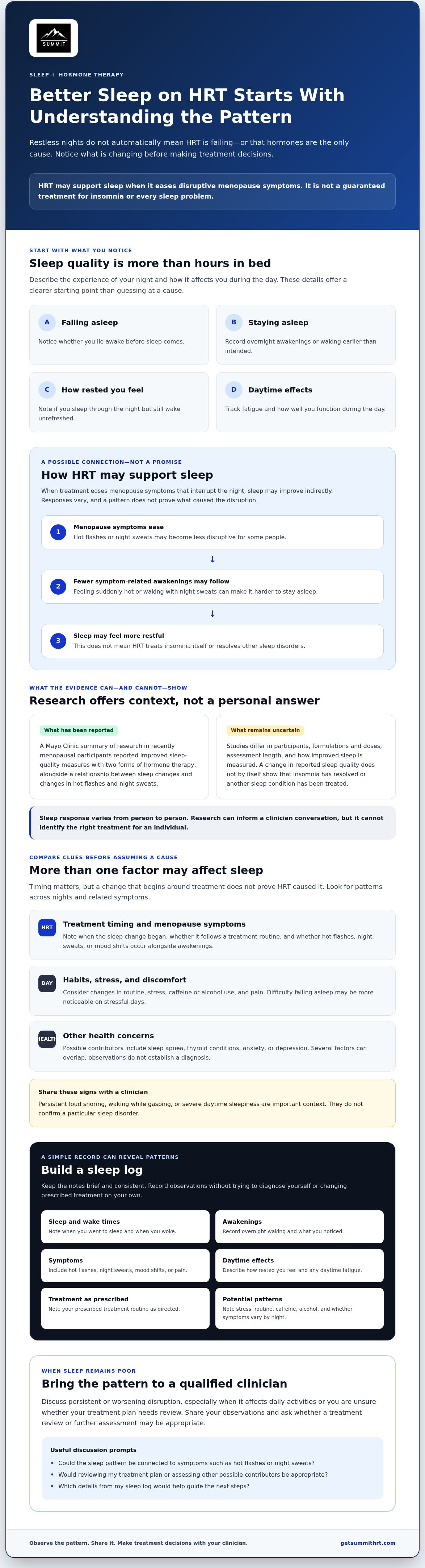
Sleep disruption can continue after you start HRT. That doesn’t automatically mean your treatment is failing or that hormones are the only reason your nights feel different. Sleep quality includes how easily you fall asleep, whether you stay asleep, how rested you feel when you wake, and how well you function during the day.
A change that begins around the time you start or adjust treatment is worth recording, but timing alone can’t prove HRT caused it. Note when the change began, whether it follows a particular treatment routine, and whether it varies from night to night. A broad overview of Hormone replacement therapy (HRT) can provide general context about its use for menopausal symptoms, but your own pattern needs individual assessment.
Relief of menopause symptoms may support better sleep, but HRT isn’t a guaranteed treatment for insomnia or every cause of disrupted sleep. Start by describing what your nights actually look like rather than trying to identify the cause on your own.
Which sleep changes are worth noticing?
Be specific about the type of disruption. Are you lying awake before falling asleep, waking repeatedly, waking earlier than intended, or sleeping through the night but still feeling unrefreshed? Note related changes, such as hot flashes, night sweats, mood shifts, or daytime fatigue. A brief record can help you see whether these symptoms occur together.
Include when the pattern started and whether it changes across nights. For example, note if awakenings coincide with feeling overheated, or if difficulty falling asleep is more noticeable on stressful days. These observations don’t establish a cause, but they give you and your clinician a clearer starting point.
Why sleep problems may have more than one cause
Menopause-related symptoms can overlap with changes in routine, stress, caffeine or alcohol use, pain, and other health concerns. Several factors may affect sleep at once, so avoid assuming that every restless night reflects hormone levels. The goal of optimizing sleep quality on hrt is to understand the pattern and consider possible contributors before making treatment decisions.
Pay attention to symptoms worth discussing with a clinician, including persistent loud snoring, waking while gasping, or severe daytime sleepiness. These signs don’t confirm a particular sleep disorder, but they’re important context to share. Discuss ongoing or worsening disruption, especially if it’s affecting daily activities or you’re unsure whether your treatment plan needs review.
How HRT May Affect Sleep Quality: What the Evidence Can, and Cannot, Show
HRT may help some people sleep better when it reduces menopause symptoms that interrupt the night, such as hot flashes or night sweats. The improvement can happen indirectly: fewer symptom-related awakenings may mean more restful nights. It doesn’t mean HRT treats insomnia itself or resolves other causes of disrupted sleep, such as a sleep disorder.
Sleep response to HRT varies from person to person, and improvement is never guaranteed. When optimizing sleep quality on hrt, notice whether sleep changes alongside the symptoms your treatment is intended to address. Don’t treat a pattern as proof that hormones caused the disruption.
The connection between vasomotor symptoms and sleep
Feeling suddenly hot or waking with night sweats can make it harder to stay asleep. A Mayo Clinic summary of research in recently menopausal participants reported improved sleep-quality measures with two forms of hormone therapy, alongside a relationship between sleep changes and changes in hot flashes and night sweats. Those findings suggest symptom relief may support sleep for some people, not that HRT will improve sleep for everyone.
Study results also depend on how researchers measure sleep. For example, a change in reported sleep quality doesn’t by itself show that someone’s insomnia has resolved or that another sleep condition has been treated.
Why evidence does not identify one best HRT regimen for everyone
Systematic reviews bring together research on different menopausal hormone therapy regimens and reported sleep outcomes. But studies may vary in who took part, which formulations and doses were used, how long treatment was assessed, and what researchers counted as improved sleep. Those differences make broad conclusions difficult, and a review can’t determine the right treatment for an individual.
Use research as context for a conversation, not as a personal prescription guide. Your prescriber can interpret evidence alongside your symptoms, medical history, current treatment, and individual risks. If sleep remains disrupted, ask whether your treatment is addressing the symptoms most likely to disturb your nights, or whether another explanation deserves attention. A clinician-led review of women’s hormone therapy may help you discuss those questions as part of an individualized assessment.
HRT, Sleep Habits, or Another Cause? Compare the Clues Before Changing Treatment
To prepare for a treatment review, compare what happens at night with what’s happening in your routine and health. A pattern can point to questions worth asking, but it can’t identify the cause on its own. Use the table to organize observations, not to diagnose yourself or decide that HRT needs to change.
Clues that menopause symptoms may be disrupting sleep
Check whether awakenings coincide with heat, sweating, or other changing menopause symptoms. Note how often this happens and how difficult it is to fall back asleep. If symptoms and sleep disruption rise and fall together, share that pattern with your prescriber. It’s useful context, not conclusive evidence that HRT is the cause or needs adjustment.
Clues to discuss beyond hormones
Keep track of schedule changes, naps, stress, caffeine, alcohol, medications, and nighttime discomfort. These details can help distinguish a recurring pattern from an isolated bad night. Loud snoring, witnessed pauses in breathing, or marked daytime sleepiness deserve clinical discussion, but they aren’t enough to diagnose sleep apnea. If insomnia persists, ask whether it should be assessed separately. This broader view supports optimizing sleep quality on hrt without making assumptions or changing prescribed treatment on your own.
How to Improve Sleep Quality on HRT: A Step-by-Step Tracking Plan
A brief, consistent record can turn “I’m sleeping badly” into useful details for a treatment conversation. The goal isn’t to monitor every moment or diagnose yourself. It’s to notice patterns, support steady sleep habits, and give your clinician a clearer picture while you continue HRT as prescribed.
Establish a baseline. For several nights, record your usual bedtime, approximate time to fall asleep, awakenings, final wake time, and how rested or alert you feel the next day. A rough estimate is useful; perfection isn’t required.
Log symptoms and relevant changes. Note hot flashes, night sweats, mood changes, pain, stress, naps, and changes in routine. Include your prescribed treatment and when you take or use it, as directed. Don’t change the dose, timing, route, or stop HRT without guidance from your prescriber.
Support a steady sleep routine. Aim for consistent sleep and wake times where practical. Make your bedroom comfortable, dark, and quiet, and note whether these conditions seem to help. Keep the routine realistic enough to follow on ordinary days.
Review the pattern with your clinician. Look for recurring connections, such as awakenings alongside night sweats or poorer sleep after a schedule shift. Treat these as observations to discuss, not proof of cause.
Keep a practical sleep and symptom log
A short daily note is easier to use than relying on memory during an appointment. Record the details in a notebook or another format that works for you. If a structured measure would help, ask whether the Pittsburgh Sleep Quality Index (PSQI), a validated questionnaire about sleep quality and disturbances over the past month, is suitable for your situation. It can organize your report, but it doesn’t diagnose the cause of poor sleep.
Prepare a focused conversation with your clinician
Bring your log, current medication list, and a timeline of when HRT began or changed and when sleep disruption started. Ask what benefits and risks apply to your individual treatment, what signs to monitor, and how follow-up will be assessed. If symptoms are severe, worsening, or concerning, seek timely medical advice rather than waiting for a routine review.
If you’d like to review your women’s HRT and sleep concerns with a clinician, discuss HRT with Summit Rejuvenation. A clear record can help make that conversation more focused and support your next steps toward optimizing sleep quality on hrt.
When Sleep Remains Poor on HRT: Get an Individualized Clinical Review
If sleep keeps worsening, menopause symptoms aren’t improving as expected, or daytime fatigue is interfering with your routine, bring the pattern to your prescriber. A review doesn’t assume HRT is the cause. It helps clarify whether treatment goals, other symptoms, or a separate health concern need attention. Don’t change or stop prescribed HRT on your own.
What an individualized review may cover
Your clinician may discuss when sleep problems began, how they’ve changed, which menopause symptoms continue, your current treatment, relevant health history, and what you hope to improve. Share your sleep log and medication list, including any recent changes. This context helps guide a decision about whether treatment should be reviewed and whether further assessment is appropriate.
Depending on your history and symptoms, a clinician may consider examination, relevant testing, or referral. Comprehensive bloodwork can inform hormone care when appropriate, but it can’t independently diagnose sleep apnea, insomnia, or other sleep disorders. No single test or treatment can be assumed to resolve disrupted sleep. For a clinician-guided discussion of women’s HRT, you can explore Summit Rejuvenation’s hormone care.
How telehealth can support a follow-up conversation
A telehealth consultation can provide a way to discuss ongoing concerns and care options where available. Summit Rejuvenation offers telehealth consultations, women’s hormone therapy, and comprehensive bloodwork analysis. Whether these are suitable for you depends on your circumstances and clinical review. Bloodwork is one possible part of a broader assessment, not a stand-alone explanation for poor sleep.
Before a conversation, write down your main questions: What symptoms should treatment address? How will we review benefits and risks for my health history? What should happen if sleep remains disrupted? These questions can help make the discussion focused and collaborative, without assuming in advance that your dose or treatment needs to change. Individualized follow-up is a practical next step in optimizing sleep quality on hrt.
Discuss your hormone health with Summit Rejuvenation if you’d like to explore whether a clinician-led review may be appropriate.
Take the Next Step Toward More Restful Nights
Better sleep on HRT starts with a clearer picture, not a quick assumption. Track what’s happening overnight, notice whether symptoms and routines change alongside your sleep, and bring those observations to your clinician. HRT may ease sleep disruption linked to menopause symptoms, but it won’t address every cause, and results aren’t guaranteed.
That practical approach can make optimizing sleep quality on hrt feel more manageable: understand the pattern, keep treatment decisions guided by your prescriber, and ask what follow-up makes sense for your health and goals. Summit Rejuvenation offers hormone therapy for women and men, telehealth consultations, and comprehensive bloodwork analysis as part of a broader clinician-led review. Bloodwork may inform hormone care, but it doesn’t independently diagnose sleep disorders.
Discuss your hormone health with Summit Rejuvenation and explore whether an individualized conversation could help clarify your next steps. With informed questions and appropriate guidance, you can move forward with greater confidence.
Frequently Asked Questions
Can HRT improve sleep quality?
HRT may improve sleep for some people when it reduces menopause symptoms, such as hot flashes or night sweats, that interrupt rest. Response varies, and the evidence depends on the population studied, treatment regimen, and how sleep was measured. HRT isn’t a guaranteed insomnia treatment or a solution for every sleep disorder. If sleep problems persist, discuss possible causes and your individual treatment risks with your prescribing clinician.
Why am I still waking up at night while taking HRT?
Nighttime waking can continue for several reasons, including ongoing menopause symptoms, stress, schedule changes, medication effects, pain, insomnia, or sleep apnea. Track when you wake and any symptoms or changes that seem to occur alongside it. That pattern can help guide a conversation with your clinician, but it won’t identify the cause by itself. Don’t change or stop prescribed HRT without medical guidance.
How long does it take for HRT to improve sleep?
There’s no fixed timeline for sleep to improve on HRT. The timing and degree of change vary, and sleep may shift as related menopause symptoms respond, while other causes of disrupted sleep remain. Ask your prescriber what timeframe and follow-up measures are appropriate for your specific treatment plan. If sleep worsens or continues to interfere with daily life, contact your clinician for a review rather than waiting for a particular milestone.
Should I change when I take HRT to sleep better?
There’s no universal schedule for taking HRT to improve sleep. Timing depends on the prescribed medication and your personal circumstances. Don’t change the timing, dose, route, or formulation on your own. Instead, note when you take your treatment as prescribed and when sleep symptoms occur, then ask your prescriber whether an adjustment is appropriate. This gives your clinician useful context without risking an unsupervised treatment change.
Can progesterone help with sleep while on HRT?
Progesterone may be part of some menopausal hormone therapy plans, but its role and suitability depend on your health and prescribed regimen. It shouldn’t be treated as a sleep aid or added for sleep without clinical review. If you’re taking progesterone and still sleeping poorly, ask your clinician about its intended role, potential benefits and risks, and whether other causes of sleep disruption should be considered.
What should I track to discuss poor sleep on HRT with my clinician?
Record your bedtime, wake time, overnight awakenings, daytime fatigue, and any hot flashes or night sweats. Note treatment timing as prescribed, along with relevant changes in habits or health. A brief log can reveal patterns, but it can’t diagnose the cause of poor sleep. Bring it and your current medication list to your clinician. Don’t use the log alone to change or stop treatment.
Can HRT cause sleep problems?
A sleep change during HRT is worth discussing, but the timing alone doesn’t establish that treatment caused it. Record when the change began, any treatment adjustments, and other relevant factors, such as stress, schedule changes, or discomfort. Share the pattern with your prescriber, especially if symptoms are new or troubling. Don’t stop or adjust HRT independently; your clinician can help assess possible causes and appropriate next steps.


Comments