Improving Sexual Performance With TRT: What to Expect in 2026
What if improving sexual performance with TRT starts with finding out what’s behind the change, rather than starting treatment right away? Low testosterone may contribute to reduced sexual desire, but erection difficulties can have other causes. It’s understandable to want a clearer picture before weighing treatment risks, fertility concerns, or ongoing care.
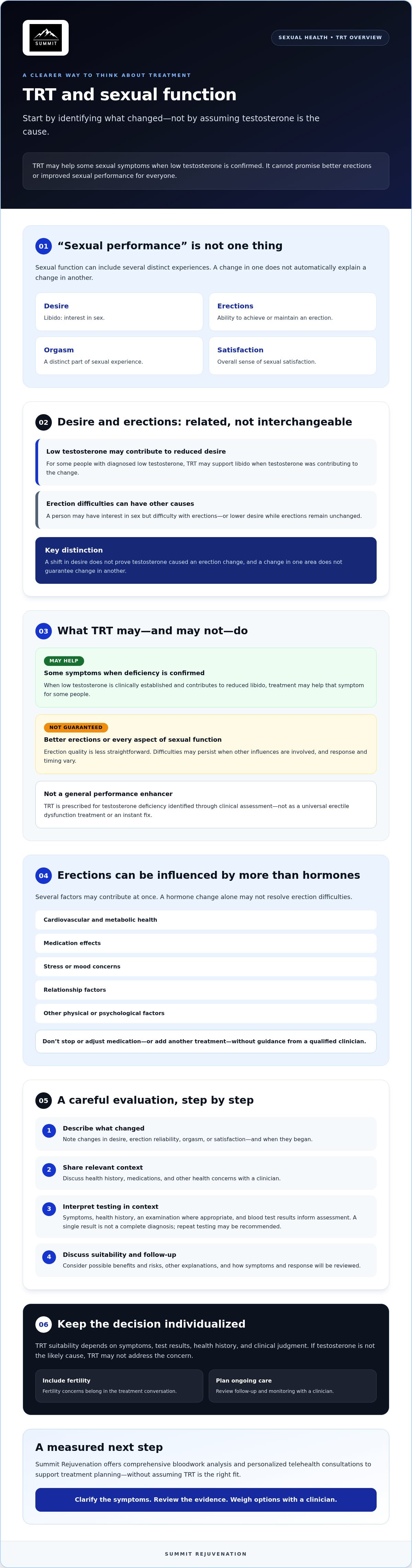
TRT may help some sexual symptoms when low testosterone is confirmed, but it can’t promise better erections or improved sexual performance for everyone. Desire and erections are different aspects of sexual function. A careful evaluation can help clarify whether testosterone may be relevant to your symptoms or whether other factors need attention.
This guide explains what TRT may and may not improve, what testing and follow-up to discuss with a clinician, and why fertility should be part of the conversation. You’ll also learn how comprehensive bloodwork and a personalized telehealth consultation can support a measured next step, without assuming TRT is right for you.
Table of Contents
What Does Improving Sexual Performance With TRT Really Mean?
Changes in sexual desire, erections, or confidence can feel personal, and it isn’t always obvious what’s causing them. “Sexual performance” is a broad phrase. It can refer to libido, the ability to achieve or maintain an erection, orgasm, or overall satisfaction. These experiences can affect one another, but they’re distinct concerns and may not have the same cause.
Testosterone replacement therapy (TRT) is prescribed for testosterone deficiency identified through clinical assessment, not as a general performance enhancer. If low testosterone contributes to a symptom, treatment may help that symptom for some people. Improvement isn’t guaranteed, however, and may not extend to every aspect of sexual function. For background on the treatment and its uses, see Androgen replacement therapy.
Libido and erections are related, but not interchangeable
Libido means sexual desire. Erectile function refers to achieving or maintaining an erection. Someone may be interested in sex but have difficulty with erections, or notice lower desire while erections remain unchanged. A shift in one doesn’t prove testosterone caused a change in the other.
Sexual function can also be affected by health conditions, medications, stress, mood, relationship dynamics, and other psychological or physical factors. That’s why improving sexual performance with TRT starts with identifying which changes you’re experiencing, rather than assuming every concern points to low testosterone.
When testosterone may be relevant to sexual symptoms
Symptoms can prompt an evaluation, but they can’t establish testosterone deficiency on their own. A clinician considers your symptoms alongside your health history, an examination where appropriate, and blood test results. Testing needs to be interpreted in context. A single result isn’t a complete diagnosis, and the clinician may recommend repeat testing to clarify the picture.
Be specific about what has changed and when. For example, note whether desire has declined, erections are less reliable, orgasm feels different, or satisfaction has shifted. Share relevant medications and health concerns, too. This gives a clinician a clearer basis for discussing possible explanations and whether testosterone treatment is appropriate. If testosterone isn’t the likely cause, TRT may not address the concern, so an evaluation should leave room for other explanations and next steps.
How TRT Can Affect Libido, Erections, and Sexual Function
Sexual changes during TRT depend on whether testosterone deficiency is clinically established, which symptoms were present before treatment, and how an individual responds. Desire and erection quality are separate outcomes. A person may notice a change in interest in sex without a corresponding change in erections, or vice versa. Orgasm and satisfaction may also be influenced by factors beyond testosterone.
What TRT may change when testosterone is low
For some people with diagnosed low testosterone, treatment may support sexual desire if low testosterone was contributing to reduced libido. That possibility isn’t a promise, and it doesn’t mean TRT will improve every aspect of sexual function. The goal is to treat a confirmed hormone deficiency for an appropriate clinical reason, then review symptoms and response with a clinician.
Erection quality is less straightforward. Testosterone can be one part of the picture, but erectile difficulties may persist if other causes are involved. TRT also isn’t an instant fix. The timing and extent of any changes vary, so a clinician can help set a suitable follow-up plan instead of relying on an assumed timeline.
Why erections may not improve with testosterone alone
Cardiovascular and metabolic health can affect blood flow and erectile function. Medication effects, psychological stress or mood concerns, and relationship factors may also contribute. More than one influence can be present at once, which helps explain why a change in hormone levels may not resolve erection difficulties.
A clinician may consider these factors alongside symptoms, health history, and hormone results when discussing whether TRT is suitable. Don’t stop or adjust medication, or add another treatment, without guidance from a qualified clinician. Before deciding, review the potential risks of testosterone therapy and ask how your individual health profile affects the balance of possible benefits and risks.
TRT response can’t be guaranteed because sexual symptoms have multiple possible causes, and treatment effects differ from person to person. Improving sexual performance with trt is best approached as a question for assessment, not a result to expect automatically. If you’re considering whether hormone evaluation may be relevant, Summit Rejuvenation offers telehealth consultations and personalized treatment planning through TRT evaluation and care.
Does TRT Fix Erectile Dysfunction? Limits, Risks, and Misconceptions
No. TRT isn’t a universal cure for erectile dysfunction (ED). It may be considered when a clinician finds testosterone deficiency and determines treatment is appropriate, but erection problems can have causes that testosterone therapy won’t address. A low test result alone doesn’t establish that TRT will resolve ED, and normal testosterone doesn’t rule out other causes that deserve attention.
When persistent erectile difficulties need a broader evaluation
If erection difficulties recur or cause distress, discuss them with a qualified clinician rather than trying to identify the cause yourself. Cardiovascular and metabolic health can be relevant because blood flow and broader health conditions may affect erectile function. Medications, mood, stress, and other factors may also play a role. No single symptom points to one definite explanation.
An assessment can bring together your symptoms, test results, health history, and treatment goals. That broader view matters. Focusing only on testosterone may miss another contributor, while assuming testosterone is responsible can lead to expectations TRT can’t meet.
What TRT does not promise
TRT can’t guarantee firmer erections, improved sexual performance, greater confidence, or a better relationship. Even when treatment is clinically appropriate, benefits and side effects differ between individuals. Deciding whether to begin means weighing possible benefits against personal health considerations and committing to clinician-directed follow-up and monitoring.
There are practical and safety considerations, too. Depending on the person and treatment, a clinician may monitor testosterone levels, blood counts, and blood pressure, and discuss possible effects such as acne, fluid retention, or changes in red blood cell levels. Monitoring helps a clinician assess response and identify concerns, but it doesn’t remove all risk. Ask which checks apply to your situation and how often they’re needed.
Fertility goals deserve an explicit conversation before starting. Testosterone treatment can reduce the body’s sperm production, which may affect fertility during treatment. If you may want biological children, tell your clinician before making a decision and ask about the implications for your plans. Don’t start, stop, or change treatment without medical guidance.
Improving sexual performance with trt should never be framed as a guaranteed outcome. A measured decision accounts for the reason for symptoms, test findings, potential risks, fertility priorities, and your willingness to continue monitoring. The right next step may be TRT, another approach discussed with a clinician, or further evaluation before deciding.
How to Evaluate Whether TRT Fits Your Sexual Health Concerns
A thoughtful evaluation can help distinguish symptoms that may be related to testosterone from concerns with other possible causes. Go prepared to explain what has changed, when it began, and how it affects you. Improving sexual performance with trt should start with understanding your health picture, not assuming a prescription is the answer.
Questions to bring to a testosterone evaluation
Use the conversation to understand the reasoning behind any recommendation. Consider asking:
Which symptoms and test results support or don’t support testosterone deficiency?
What other factors could be contributing to my sexual symptoms?
What benefits are realistic in my situation, and what remains uncertain?
What monitoring would treatment involve, and how could it affect my fertility plans?
Share relevant health concerns and all medications or supplements you take. If having children matters to you, raise that before considering treatment. These details help the clinician weigh your goals and health history alongside the test results.
How bloodwork supports individualized decisions
Bloodwork can provide useful information, but a result shouldn’t be treated as a diagnosis by itself. Clinicians select and interpret tests in light of your symptoms, medical history, and overall presentation. The appropriate evaluation may differ from person to person, so avoid relying on an online checklist or a single number to decide whether TRT fits.
Summit Rejuvenation offers comprehensive bloodwork analysis and telehealth consultations with personalized treatment planning. For additional context about treatment and its evaluation, review this comprehensive TRT therapy guide.
After discussing your symptoms and questions, you can review the findings with a clinician and decide whether treatment is appropriate or whether another explanation needs attention first. If you’d like to explore a remote conversation about hormone therapy, explore telehealth hormone therapy as an option. You can also ask about a telehealth consultation to discuss your concerns and relevant testing.
Taking the Next Step: Personalized TRT Care Without Performance Promises
Sexual symptoms are a reason to seek assessment, not proof that TRT is the answer. Treatment is relevant only when a clinician finds it appropriate for your individual health picture. A clear, measured conversation can help you understand your options without pressure to start therapy or expectations of guaranteed changes in desire, erections, confidence, or relationships.
What a responsible care conversation should cover
Bring your goals and a clear account of your symptoms, including what has changed and how it affects you. Share relevant health history and test results, along with medications and any fertility plans. These details help a clinician consider whether testosterone may be relevant or whether other factors warrant attention.
Ask what supports or argues against treatment in your case, which outcomes remain uncertain, and what monitoring would involve if TRT is considered. You should have room to raise concerns, understand potential trade-offs, and decide together whether the next step makes sense. A thoughtful evaluation may conclude that TRT isn’t appropriate, and that’s useful information, too.
A supportive next step with Summit Rejuvenation
Summit Rejuvenation’s care model includes comprehensive bloodwork analysis, personalized treatment planning, and telehealth consultations. These options can provide a structured way to discuss symptoms and review relevant testing. A clinician must determine whether TRT is suitable for you. Neither sexual symptoms nor a lab result alone establishes that treatment is right.
For more about the clinic’s approach, learn about Summit Rejuvenation. If you’re ready to discuss your concerns and possible options, connect with Summit Rejuvenation to explore a telehealth conversation. Use that discussion to seek clarity, not a performance promise. The goal is an informed decision that reflects your symptoms, health priorities, and the clinician’s assessment.
Make Your Next Step an Informed One
Sexual symptoms deserve thoughtful attention, but they don’t automatically mean low testosterone is the cause. TRT may be relevant when a clinician determines it’s appropriate. It isn’t a universal treatment for erectile dysfunction or a guarantee of better desire, erections, or confidence. A useful evaluation considers your symptoms, health history, test results, fertility goals, and the benefits and risks that matter to you.
That’s the measured approach to improving sexual performance with trt: seek clarity before committing to treatment. Summit Rejuvenation’s care model includes comprehensive bloodwork analysis, personalized treatment planning, and telehealth consultations to discuss symptoms and relevant testing. Telehealth availability can depend on where you live, so confirm state availability when exploring care.
If you’re ready to discuss your concerns and learn whether TRT may be appropriate, explore a personalized, clinician-guided TRT consultation. You deserve clear answers and a plan built around your health, not a performance promise. A careful first conversation can help you move forward with confidence.
Frequently Asked Questions
Can TRT improve sexual performance?
Sometimes, if a clinician confirms testosterone deficiency and considers treatment appropriate. TRT may help sexual desire for some people whose low libido is related to low testosterone, but it doesn’t guarantee better erections, orgasm, or satisfaction. Improving sexual performance with trt depends on the symptoms, their cause, and individual response. A clinical evaluation helps set realistic expectations and consider other contributors to sexual changes.
Does TRT help with erectile dysfunction?
TRT may be relevant to erectile difficulties in some people with clinically confirmed low testosterone, but it isn’t a universal treatment for erectile dysfunction. Erections can be affected by cardiovascular or metabolic health, medications, stress, mood, and other factors. A clinician can review symptoms, health history, and test results to assess whether testosterone may be involved. Don’t start TRT or change medication without medical guidance.
How long does it take for TRT to affect libido?
There isn’t one timeline that applies to everyone. If TRT is appropriate and low testosterone is contributing to reduced desire, changes may take time and can vary by person. Treatment isn’t an instant fix, and a change in libido isn’t assured. Discuss with your clinician what to track and when to review your response. Report any concerns rather than changing your dose on your own.
What happens if TRT does not improve sexual function?
If sexual function doesn’t change as hoped, tell your clinician. They can review your symptoms, test results, treatment response, and any side effects, then consider whether testosterone is still an appropriate option or whether other factors may be involved. Don’t increase, stop, or otherwise adjust TRT without medical advice. Follow-up is an opportunity to revisit your goals and decide on a suitable next step together.
Can you have low testosterone without low libido?
Yes. Low libido can be associated with testosterone deficiency, but not everyone with low testosterone notices reduced desire, and sexual symptoms alone can’t diagnose a deficiency. A clinician considers symptoms alongside appropriately interpreted bloodwork and health history. If you have concerns about testosterone even without changes in libido, discuss them with a healthcare professional rather than relying on one symptom or a single test result.
Is TRT safe if I want to have children?
TRT can reduce sperm production and may affect fertility during treatment. If you’re planning to have children now or may want to in the future, tell your clinician before starting testosterone. Ask how treatment could affect your fertility goals and what options may be appropriate for your situation. Don’t assume TRT is suitable while trying to conceive, and don’t stop prescribed treatment without medical guidance.
What tests are needed before starting TRT?
Testing depends on your symptoms and health history. Clinicians generally assess testosterone with bloodwork, often confirming a low result with repeat early-morning testing, and may consider other tests based on your individual presentation. No single lab result establishes the full diagnosis on its own. Ask what each test is intended to clarify and how the results, symptoms, and medical history together inform a treatment decision.


Comments