Erectile Dysfunction and Low Testosterone: Understanding the Link in 2026
Updated: Sep 28
Could treating low testosterone improve erections, or might it miss the real cause? The erectile dysfunction and low testosterone link is real, but it doesn’t prove that one condition explains the other. Testosterone can affect sexual desire, while erections also depend on blood flow, nerve function, overall health, and psychological factors.
If you’re noticing erection changes, it makes sense to wonder whether hormones are involved, especially when symptoms overlap. But starting testosterone without confirming a deficiency may not address what’s affecting erectile function. That distinction matters when considering treatment.
This guide explains when low testosterone may contribute to erectile dysfunction, what clinicians may assess, and why symptoms and blood tests need to be considered together. You’ll also learn how testosterone therapy differs from common ED treatments, when approaches may be combined, and what questions can help you choose a sensible next step. A careful evaluation can bring clarity without assuming that one test, symptom, or treatment tells the whole story.
Table of Contents
Erectile Dysfunction and Low Testosterone: What Is the Connection?
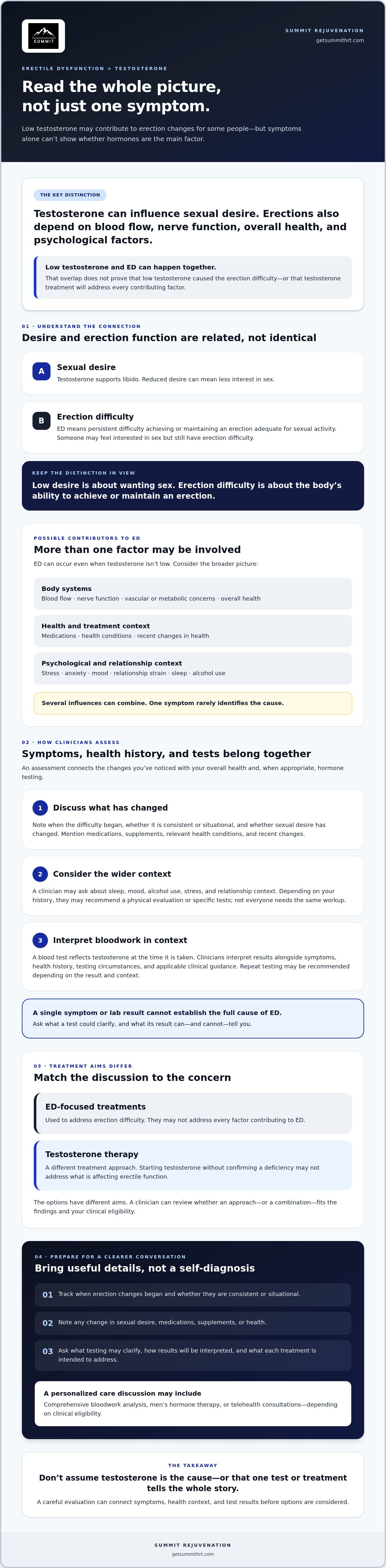
Erectile dysfunction (ED) means persistent difficulty achieving or maintaining an erection adequate for sexual activity. Testosterone may play a part in sexual function, but it isn’t an on-off switch for erections. Hormones influence desire, while an erection also depends on coordinated blood flow, nerve signals, and other physical and psychological factors. Erectile dysfunction (ED) can have several potential causes, so the erectile dysfunction and low testosterone link needs to be understood in context.
Low testosterone and ED can occur together, but that overlap doesn’t prove low testosterone caused the erection difficulty. Some men with low testosterone can still get erections, and ED can occur when testosterone levels aren’t low. Knowing the difference can help you ask better questions and avoid assuming hormone treatment will address every cause.
How testosterone can relate to sexual function
Testosterone supports libido, or sexual desire, and may contribute to sexual function. Someone with reduced desire might notice less interest in sex; someone with ED may feel interested but have difficulty getting or keeping an erection. These experiences can overlap, but they aren’t the same. Low desire is about wanting sex; erection difficulty is about the body’s ability to achieve or maintain an erection.
Low testosterone may contribute to erection problems for some people, particularly when reduced desire is also present. But it isn’t the only explanation or automatically the main one. Symptoms can suggest what to discuss with a clinician, but they can’t confirm a hormone deficiency on their own.
Why ED can happen when testosterone is not low
Erections rely on healthy blood flow and nerve function, so vascular or metabolic concerns can contribute to ED even when testosterone isn’t low. Certain medications, stress, anxiety, relationship strain, and other health factors may also play a role. Sometimes several influences combine, which is why one symptom rarely identifies the cause.
Notice what has changed and when: whether the difficulty is consistent or situational, whether sexual desire has shifted, and whether you’ve started a medication or experienced a change in health. Share those details with a clinician rather than trying to diagnose yourself from symptoms alone. An assessment can distinguish reduced desire from erection difficulty, consider relevant health factors, and determine whether hormone testing may be useful. That gives you a clearer starting point for discussing appropriate options.
How Clinicians Assess Erectile Dysfunction and Low Testosterone
A useful assessment connects the erection changes you’ve noticed with your overall health and, when appropriate, hormone testing. The erectile dysfunction and low testosterone link can’t be confirmed from symptoms alone. Clinicians generally begin with a discussion, move to evaluation and testing as appropriate, then review what the findings may mean before considering options.
What to discuss during an ED evaluation
Before an appointment, jot down when the difficulty began, whether it happens consistently or in certain situations, and whether your sexual desire has changed. Bring a list of medications and supplements, and mention relevant health conditions or recent changes. These details give the clinician a clearer picture than a single symptom can.
You may also be asked about sleep, mood, alcohol use, stress, and relationship context. These questions aren’t assumptions about the cause. They help identify factors that can affect sexual function. Depending on your history, a clinician may recommend a physical evaluation or specific tests, but not everyone needs the same workup. Mayo Clinic’s overview of Diagnosing and treating erectile dysfunction describes how medical history and testing can contribute to evaluation.
What testosterone bloodwork can and cannot show
A blood test provides information about testosterone at the time it’s taken. By itself, it doesn’t establish that low testosterone is causing ED or determine which treatment is appropriate. Clinicians interpret results alongside symptoms, health history, the circumstances of testing, and applicable clinical guidance. Depending on the result and context, they may recommend repeat testing. Ask your clinician about the timing and protocol that apply to you.
A single symptom or lab result cannot establish the full cause of ED. A result outside a reference range needs clinical interpretation, just as a result within range doesn’t explain every erection concern. The goal is to understand the whole picture and identify what further evaluation, if any, makes sense.
For more background on testosterone evaluation and therapy, read this TRT therapy guide. Summit Rejuvenation offers comprehensive bloodwork analysis and men's testosterone therapy. If you’re considering whether hormone assessment may be relevant, you can explore Summit Rejuvenation’s services and ask whether a telehealth consultation may be suitable for your circumstances.
Comparing ED Treatment and Testosterone Therapy
ED-directed care and testosterone therapy have different targets. Some ED treatments, such as prescription medicines that support blood flow, address erection function. Testosterone therapy addresses confirmed low testosterone when related symptoms and clinical context support treatment. Since the erectile dysfunction and low testosterone link doesn’t mean hormones explain every erection problem, choosing a path starts with assessment, not guesswork.
When testosterone therapy may be considered
A clinician may discuss testosterone therapy when symptoms, test results, medical history, and individual risks together support it. A lab value or online symptom checklist alone can’t determine whether treatment is appropriate. Decisions should follow a medical evaluation and discussion of potential benefits, limitations, and monitoring. For broader context, see this comprehensive TRT guide.
When ED-focused evaluation or treatment may be relevant
Persistent erection difficulty deserves assessment even if testosterone isn’t low. A clinician can consider possible vascular, metabolic, medication-related, or other contributors and discuss options based on your health history. NIDDK explains how doctors diagnose erectile dysfunction, including the role of medical history and testing. If medication is considered, ask about suitability and interactions with your current prescriptions. Don’t start or change treatment without professional guidance.
The practical next step is to clarify what each option is intended to address, then weigh it against your evaluation and goals. Summit Rejuvenation offers comprehensive bloodwork analysis and men's testosterone therapy. You can explore Summit Rejuvenation’s hormone therapy services and ask whether a telehealth consultation is appropriate for you.
What to Do for ED Symptoms and Suspected Low Testosterone
If erection changes or reduced sexual desire are concerning you, take a few practical steps before choosing a treatment. Track when symptoms began, how often they occur, and whether they vary by situation. Note changes in libido, sleep, stress, and general health. Make a current list of prescription medicines, over-the-counter products, and supplements. This information can help a clinician consider possible contributors.
Arrange an appointment with a qualified clinician and bring your notes. Ask what evaluation is appropriate for your symptoms, whether testosterone testing makes sense, and how the results would affect your options. For comprehensive guidance, consulting a specialized urology and sexology practice like turbourolog.pl can help evaluate both physical and hormonal factors. Don’t start testosterone or ED medication on your own. Both require professional review, including consideration of your medical history, possible risks, and medication interactions.
If symptoms are sudden or severe, seek prompt medical attention rather than waiting for a routine hormone consultation. A telehealth appointment may suit some concerns, but it isn’t a substitute for urgent in-person care when symptoms need immediate evaluation.
Questions to take to a medical consultation
Use your appointment to understand the reasoning behind next steps. Ask whether your symptoms point toward low testosterone, another cause, or several contributing factors; what tests are appropriate and what each can clarify; and how results will be interpreted. If treatment is discussed, ask about expected benefits, risks, monitoring, alternatives, and follow-up. This makes the conversation more useful than focusing on a single lab value or symptom.
How to evaluate a telehealth hormone care option
Look for a clinician-led process that reviews your symptoms and relevant health history, explains any recommended testing, and outlines follow-up. Confirm that the provider can serve patients in your state, and ask whether your location and clinical circumstances are eligible for telehealth care. For more information on remote hormone care, read this online hormone therapy guide.
The erectile dysfunction and low testosterone link is one possibility to discuss, not a diagnosis to make from a checklist. Summit Rejuvenation offers comprehensive bloodwork analysis, men's testosterone therapy, and telehealth consultations. Ask the clinic whether its services and telehealth consultations are suitable for your clinical circumstances.
A Personalized Path Forward for ED and Possible Low Testosterone
The next step isn’t to assume that testosterone explains erection difficulties. Use your symptoms, health history, and any appropriate test results to identify which factors may be contributing and what options make sense to discuss. The erectile dysfunction and low testosterone link can be part of that conversation, but a personalized assessment helps keep treatment focused on your situation rather than a presumed cause.
How comprehensive bloodwork can inform a discussion
Bloodwork can provide information about hormone levels and other measures a clinician considers relevant. It can’t independently diagnose every cause of ED or show that a particular result is responsible for erection changes. Results are most useful when interpreted alongside symptoms, medical history, and the reason each test was ordered.
Summit Rejuvenation offers comprehensive bloodwork analysis as part of its hormone health services. A clinician can use relevant results to inform a discussion of possible next steps, not as automatic proof that testosterone therapy is appropriate. For more about the clinic’s approach, read the Summit Rejuvenation precision health guide.
When to consider a professional consultation
Consider discussing persistent erection difficulties with a qualified clinician, particularly if you’re also concerned about changes in libido or other possible hormone-related symptoms. An evaluation can help clarify whether further testing or a treatment discussion is appropriate. It may also identify reasons to consider care beyond hormone levels.
Summit Rejuvenation offers men's hormone therapy, comprehensive bloodwork analysis, and telehealth consultations. Whether a consultation or treatment is suitable depends on clinical evaluation. Ask what the assessment can clarify, what options follow from the findings, and what follow-up may involve. No specific treatment outcome, including improvement in erections, can be promised.
A clear conversation is a sensible place to start. Discuss your hormone health with Summit Rejuvenation and ask whether its services may fit your needs.
Take the Next Step Toward Clearer Answers
The erectile dysfunction and low testosterone link is worth exploring, but neither erection difficulty nor a hormone result alone identifies the cause. Testosterone can influence sexual desire, while erections may be affected by several other factors. A clinician can consider your symptoms, health history, and appropriate test results together before discussing possible next steps.
That assessment matters because testosterone therapy and ED-focused care address different clinical concerns. Summit Rejuvenation offers comprehensive bloodwork analysis and men's hormone therapy, which may inform a discussion but can’t guarantee a particular treatment outcome. Ask the clinic whether telehealth consultation and care are appropriate for your circumstances.
If erection changes persist or you’re concerned about hormone-related symptoms, a conversation with a qualified clinician can help clarify what evaluation may be appropriate. Discuss your hormone health with Summit Rejuvenation and ask about the options that fit your circumstances. You can take this one step at a time, with clearer information guiding the way.
Frequently Asked Questions
Can low testosterone cause erectile dysfunction?
Low testosterone can contribute to erection difficulties, but it’s rarely the only possible cause. Testosterone supports sexual desire, and reduced libido may affect sexual activity, while erections also depend on blood flow, nerve function, health conditions, medications, and psychological factors. The erectile dysfunction and low testosterone link is possible, but having one symptom doesn’t prove the other condition is responsible. A clinician can assess both in context.
Does testosterone therapy improve erectile dysfunction?
Testosterone therapy may improve sexual desire and may help erectile function for some men with confirmed low testosterone, particularly when ED is mild. It doesn’t reliably resolve erection difficulties for everyone, especially if other factors contribute. A clinician needs to evaluate symptoms, test results, medical history, and individual risks before discussing therapy. If erections remain difficult, ask whether an ED-focused assessment or another treatment approach may also be appropriate.
Can you have erectile dysfunction with normal testosterone levels?
Yes. ED can occur when testosterone levels are normal because erections depend on more than hormones. Blood-flow or metabolic concerns, medication effects, nerve problems, stress, and other factors may contribute. Sometimes several influences overlap. A normal testosterone result can inform the discussion, but it doesn’t explain the erection difficulty by itself. Share persistent symptoms and relevant health or medication changes with a clinician for assessment.
How is low testosterone tested when you have erectile dysfunction?
A clinician may order a blood test to measure testosterone if your symptoms and history make testing appropriate. Results are interpreted alongside symptoms and clinical context, not as a standalone diagnosis. The Endocrine Society recommends confirming suspected hypogonadism with consistently low testosterone and repeat morning testing. Ask your clinician about the timing and number of tests appropriate for you, and how the results could influence possible next steps.
What happens if testosterone is low but ED continues?
Ongoing ED deserves further discussion even if testing confirms low testosterone or treatment is being considered. A clinician can reassess erection symptoms, review relevant health history and medications, and consider other contributing factors. Testosterone therapy may address low testosterone, but it doesn’t guarantee that erections will improve. Ask what additional evaluation may be useful and whether an ED-directed option could be appropriate for your circumstances.
Is erectile dysfunction always a sign of low testosterone?
No. ED isn’t proof of low testosterone. Testosterone is more directly associated with sexual desire, while erection changes can have vascular, metabolic, medication-related, psychological, or other contributors. Low testosterone and ED can occur together, but one doesn’t establish the cause of the other. If erection difficulties persist, discuss them with a clinician rather than trying to identify a hormone problem from symptoms alone.
Should I get testosterone treatment for erectile dysfunction?
Not without a clinician’s evaluation. Testosterone therapy is considered when symptoms, appropriate testing, medical history, and individual risks support it, not simply because ED is present. A clinician can help determine whether hormone testing is appropriate and discuss other possible causes and options. Don’t start testosterone or ED medication without professional guidance. Ask what each recommended test can clarify and how the findings would shape a treatment discussion.


Comments