Confidence After TRT: Expectations and Progress Tracking
What if confidence during TRT isn’t a switch that flips, but a change you notice gradually across different parts of daily life? If you’re wondering about feeling confident after starting TRT, it’s understandable to look for a clear sign that treatment is helping. Confidence can overlap with mood, energy, sleep, and other factors, so one good or difficult day doesn’t tell the whole story.
You deserve realistic expectations, not a promise that TRT will make you feel a certain way. Changes vary from person to person, and not noticing an immediate difference doesn’t automatically mean treatment isn’t working. Progress is easier to understand when you look for patterns over time and share them with your clinician.
This article explains what confidence during TRT may mean, how to track changes in mood, energy, sleep, and everyday functioning, and what questions to bring to a follow-up. You’ll also learn how individualized evaluation and monitoring can help you discuss concerns without trying to diagnose yourself.
Table of Contents
Feeling Confident After Starting TRT: What Does Progress Really Mean?
Starting TRT can bring hope, questions, and uncertainty all at once. You may look forward to feeling more like yourself while also wondering what changes to expect and how you’ll know whether treatment is making a difference. Those questions are reasonable. Confidence can be one part of your experience, but it isn’t a clinical measure or a result testosterone treatment can guarantee.
A treatment goal can guide care, but it can’t promise a particular feeling. TRT decisions and follow-up should consider your individual health and response, not rely on confidence alone. For general background on the therapy and its approaches, see this overview of Androgen replacement therapy (ART); it isn’t a substitute for advice from a qualified clinician.
Why confidence can mean more than one thing
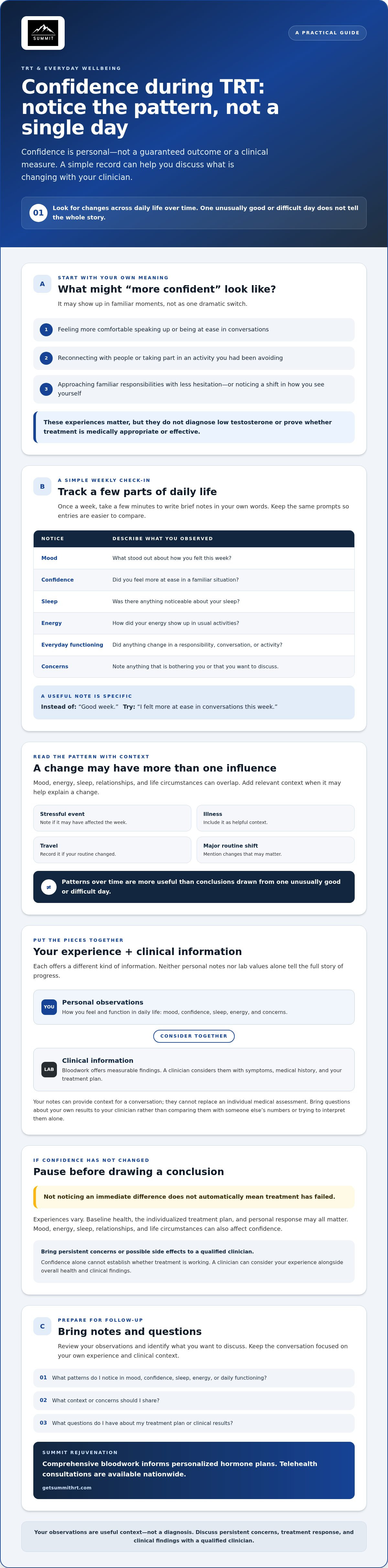
Confidence might mean feeling more comfortable speaking up, reconnecting with people, or approaching familiar responsibilities with less hesitation. It may also mean a shift in how you see yourself. These experiences matter, but they don’t diagnose low testosterone or show, on their own, whether treatment is medically appropriate or effective.
Emotional wellbeing and laboratory findings are different kinds of information. Bloodwork provides measurable results; your account describes how you feel and function. Neither should replace the other. To make progress more personal, consider what meaningful improvement would look like in your own life. For example, you might be hoping to feel more at ease in conversations or more willing to take part in an activity you’ve been avoiding.
Why experiences after starting TRT differ
Your experience may be shaped by your baseline health, the treatment plan developed for you, and your individual response. Confidence can also be affected by mood, energy, sleep, relationships, and life circumstances. These factors may overlap, making it difficult to attribute a change in how you feel to one cause alone.
There’s no single emotional timeline or outcome that applies to everyone. If you’re feeling confident after starting TRT, treat that as a personal observation to discuss, not proof of a specific clinical result. If confidence hasn’t changed, that alone doesn’t establish whether treatment is working either. Persistent distress or concerns about your response deserve an honest conversation with a qualified clinician, who can consider your experience alongside your overall health and clinical findings.
How to Assess Confidence and Other Changes During TRT
It can be hard to judge progress from memory alone. A brief, consistent record gives you something more useful to discuss at follow-up than a general impression of “better” or “the same.” Keep the process simple. The goal is to notice patterns, not monitor every feeling or explain every change yourself.
A practical way to record changes without overmonitoring
Once a week, take a few minutes to note mood, confidence, sleep, energy, and any concerns in your own words. Use the same prompts each time so your entries are easier to compare. For example, you might write, “I felt more at ease in conversations this week,” or “My energy was low after several disrupted nights.” When possible, describe what changed in a usual activity rather than simply labeling the week good or bad.
Add context when it may help explain a change, such as a stressful event, illness, travel, or a major shift in your routine. Patterns over time are more useful than conclusions drawn from one unusually good or difficult day. A notebook or app can help organize observations, but it can’t replace an individual medical assessment. If keeping notes starts to make you more anxious or focused on every fluctuation, simplify the record and discuss that concern with your clinician.
What bloodwork can, and cannot, tell you
Bloodwork offers measurable information, but a result doesn’t describe your whole experience. Your symptoms, medical history, treatment plan, and relevant test findings need to be considered together by a qualified clinician. Likewise, feeling different doesn’t establish what your laboratory results show or determine whether a treatment change is appropriate.
Comprehensive bloodwork can inform a personalized hormone plan, while your notes help explain how you’ve been feeling in daily life. For a balanced overview of the potential benefits and risks of testosterone therapy, Mayo Clinic offers additional context. Bring questions about your own results to your clinician rather than comparing them with someone else’s numbers or trying to interpret them alone.
To make your record useful, focus on a few steady prompts:
What, if anything, felt different in my mood or confidence?
How did sleep and energy affect my usual activities?
Were there concerns, possible side effects, or changes in routine worth mentioning?
If you’re feeling confident after starting TRT, note what that means in practical terms for you. If you’re unsure how to interpret your observations or bloodwork, a follow-up conversation can put both in context. Summit Rejuvenation’s men’s TRT plans are informed by comprehensive bloodwork and telehealth consultations; you can learn more about personalized TRT support.
If You Do Not Feel More Confident, What Should You Consider?
Not noticing a confidence change right away doesn’t prove TRT has failed. Confidence is personal, and treatment response isn’t judged by one feeling alone. A clinician can help review your experience alongside your health history and relevant test results to understand what the picture may mean for you.
Possible reasons progress feels unclear
Expectations can shape what you notice. You might be looking for a specific emotional shift, while changes in other areas feel more apparent, or everyday stress may make it difficult to recognize a subtle difference. Sleep disruption, relationship pressures, and other health factors can also affect how you feel. These are possibilities to discuss, not reasons to diagnose yourself.
Confidence may not change in step with laboratory results or physical symptoms. A test result is one part of an assessment; it doesn’t measure self-assurance or explain every emotional experience. If progress feels unclear, consider whether your goals still fit the treatment plan and describe what you hoped would change. That gives your clinician a clearer starting point for the conversation.
When to raise concerns with your clinician
Bring up persistent concerns, unwanted effects, or changes that interfere with daily life. Be specific about what you’ve noticed, when it began, and how it affects you. If you’re feeling confident after starting TRT but also notice an unwanted change, mention both. An honest account helps your treating clinician assess the overall response and consider appropriate next steps.
Don’t stop or adjust prescribed treatment on your own. Ask your clinician before making any change, even if you’re uncertain about the benefits or concerned about an effect. If symptoms are severe or feel like an emergency, seek urgent medical care rather than waiting for a routine follow-up.
Questions can include: “Could something else be affecting how I feel?”, “How do my symptoms and results fit together?” and “Are my goals still appropriate for this plan?” The comprehensive guide to TRT therapy can offer broader treatment context, while your clinician can help apply that information to your situation. Feeling unsure is a valid reason to ask for clarification, not a reason to decide alone that treatment has or hasn’t worked.
How to Prepare for a TRT Follow-Up Conversation
A follow-up is a chance to connect what you’ve noticed with your treatment plan, not a test you need to pass. A little preparation can help you explain what’s changed, what hasn’t, and what you want clarified. Keep it straightforward: review your notes, choose your main priorities, and write down the questions you don’t want to forget.
How to describe confidence changes clearly
“I feel more confident” is a useful starting point, but a real-life example can give your clinician more context. You might describe feeling more comfortable speaking up at work, or explain that social situations still feel difficult. Include when you first noticed the change, how often it occurs, and whether sleep, stress, or routine changes seem to affect it.
Share perceived benefits and concerns honestly, including any possible side effects. Your observations are important, but they don’t prove what caused a change. The clinician treating you is the person who can interpret your symptoms, medical history, and personal results together and discuss appropriate next steps.
Questions to bring to a follow-up
Choose the questions that matter most to you. You could ask:
How will you assess my symptoms, laboratory findings, and treatment goals together?
Which changes should I monitor, and when should I report a concern?
Could other health factors be affecting how I feel or how we interpret my progress?
Are my goals still appropriate for my current treatment plan?
Before the conversation, identify your top priorities. For example, you may want to understand an unwanted effect, discuss why a hoped-for change hasn’t happened, or clarify how your results relate to your experience. If you’re feeling confident after starting TRT, explain what that means in your daily life; if you’re not, describe that just as clearly. Neither response is a diagnosis.
Summit Rejuvenation’s men’s TRT approach uses comprehensive bloodwork to inform personalized hormone plans, with telehealth consultations available nationwide. If you’re considering a clinician-guided discussion about TRT, explore Summit Rejuvenation’s TRT consultations. Individual evaluation is essential, and a consultation can help clarify whether care may be appropriate for you.
Personalized TRT Support Can Make the Next Step Clearer
Confidence is personal, and it’s only one part of how you may experience treatment. Progress deserves context: your observations, health history, treatment goals, and clinical findings all contribute to a more informed conversation. Questions are welcome at follow-up, whether you’ve noticed a change, feel uncertain, or have concerns about your plan.
What individualized hormone care may involve
At Summit Rejuvenation, comprehensive bloodwork informs personalized hormone plans for men considering TRT. A clinical consultation provides an opportunity to discuss symptoms, health history, goals, and relevant test findings together. These steps support an individualized evaluation, but they don’t guarantee a diagnosis, prescription, or specific result.
Telehealth consultations offer an option for discussing professional hormone therapy from home. The purpose is to make a qualified conversation possible, not to replace individualized medical judgment. Treatment suitability is determined through assessment, and access depends on availability and applicable prescribing requirements.
Choosing a supportive next step
If you’re feeling confident after starting TRT, consider what that means in everyday life and share those observations with your clinician. If you aren’t noticing the changes you hoped for, that’s also useful information to bring forward. Don’t change or stop prescribed treatment on your own. Ask the treating clinician to interpret your results and discuss next steps in light of your individual circumstances.
Before pursuing care, confirm whether consultations and treatment are available where you live, and ask about any prescribing requirements that apply. Summit Rejuvenation offers telehealth consultations nationwide. Prescribed medications may be shipped directly to patients’ homes; confirm availability as part of your consultation.
A thoughtful next step is a conversation grounded in your health, your questions, and a clear explanation of what care may involve. Explore Summit Rejuvenation’s hormone care to learn about its consultation approach and whether it may be an appropriate option for you. There’s no promised outcome; the focus is on evaluation and individualized guidance.
Make Your Next TRT Conversation Count
Confidence is personal, not a guaranteed result of TRT. To understand your progress, look at patterns in how you feel and function, then discuss them alongside relevant bloodwork and your health history. If you’re feeling confident after starting trt, describe what has changed in your day-to-day life. If you’re not, share that too. Either way, your observations can help guide a useful follow-up conversation.
Summit Rejuvenation offers personalized hormone treatment plans informed by comprehensive bloodwork, along with telehealth consultations. Prescribed medication delivery is available to patients’ homes. Whether treatment may be appropriate, and what options are accessible, depends on an individual assessment and availability.
Explore personalized hormone care with Summit Rejuvenation to learn more about its approach. Bring your questions, seek qualified medical guidance, and take the next step at a pace that feels right for you.
Frequently Asked Questions
Is it normal not to feel more confident right after starting TRT?
Yes, not noticing a confidence change right away can happen, and it doesn’t prove TRT has failed. Feeling confident after starting TRT isn’t a guaranteed or immediate outcome. Confidence can be influenced by sleep, stress, relationships, and other health factors, as well as your individual response. Note what you’re experiencing and discuss persistent concerns with your treating clinician rather than drawing conclusions from one day.
How long does it take to feel different after starting TRT?
There isn’t one timeline that applies to everyone. Whether and when you notice a change can depend on your health, treatment plan, and individual response. Some changes may be easier to recognize than others, and confidence may not shift at the same time as mood, energy, or physical symptoms. Keep track of patterns and ask your clinician what to expect for your particular situation.
Can TRT improve confidence or mood?
TRT may affect mood for some people, but it can’t promise greater confidence or a particular emotional result. Confidence is personal and can be shaped by factors beyond testosterone, including sleep, life stress, and relationships. A qualified clinician can assess whether TRT may be appropriate by considering symptoms, medical history, and relevant test results. Discuss your goals and concerns openly, and avoid treating confidence alone as proof of treatment success.
What should I track after starting TRT?
Make brief, consistent notes about mood, confidence, sleep, energy, and any concerns or possible side effects. Include context that could matter, such as a stressful week, disrupted sleep, or a change in routine. Use your own words and focus on patterns rather than rating yourself every day. These observations can support a follow-up discussion, but they don’t replace clinical assessment or explain what caused a change.
What if my testosterone levels change but I still do not feel confident?
Share both the laboratory results and how you feel with your treating clinician. A change in testosterone levels doesn’t automatically mean confidence will change, since lab findings and emotional wellbeing are different kinds of information. Your clinician can interpret results alongside your symptoms, medical history, goals, and other health factors. Ask whether your expectations and treatment goals remain appropriate; don’t try to interpret results or adjust treatment on your own.
Should I stop TRT if I do not notice a change in confidence?
Don’t stop or change prescribed TRT on your own because confidence hasn’t changed. That experience is worth discussing, but it doesn’t by itself show whether treatment is appropriate or effective. Contact your treating clinician to review your concerns, any other changes, and relevant results, then discuss next steps. If you experience severe or emergency symptoms, seek urgent medical care rather than waiting for a routine follow-up.


Comments