Common Mistakes to Avoid on TRT: A Patient Checklist
What if the biggest TRT mistake happens before treatment even begins? Common mistakes to avoid on TRT often start with moving from symptoms or a single test result to a prescription without understanding the full picture. Low energy, changes in mood, or reduced sex drive can be frustrating, and conflicting claims about testosterone levels and treatment risks can make the next step unclear.
You deserve a careful evaluation and straight answers before deciding whether to pursue treatment. This checklist explains what to discuss with a clinician, including how symptoms and test results are assessed, how to set realistic goals, and how to weigh possible side effects. It also covers fertility, which TRT can affect by suppressing the body’s sperm production, and why follow-up matters after treatment starts.
Use these points to prepare for an informed conversation, not to diagnose yourself or choose a dose. You’ll find questions to help clarify your options, ways to assess whether care is individualized, and signs that a clinician is taking your health priorities seriously.
Table of Contents
Common TRT mistakes start with rushing the diagnosis
Asking questions and requesting a careful evaluation are sensible first steps. You don’t need to arrive with a diagnosis or decide on treatment before understanding what may be behind your symptoms. Fatigue, low libido, and mood changes can have several possible explanations, so symptoms alone can’t confirm low testosterone.
A clinician considers the full picture: your symptom history, medical history, overall health, examination where appropriate, and properly collected lab results. A general overview of androgen replacement therapy can explain how treatment is used, but it can’t determine whether TRT is right for you.
Mistake: treating symptoms as proof of low testosterone
Low energy might relate to sleep, stress, another health concern, or testosterone levels. Changes in sex drive or mood can also have multiple causes. Rather than self-diagnosing, tell your clinician when symptoms began, whether they come and go, how severe they feel, and how they affect your daily life. These details can help guide a more useful evaluation.
Mistake: relying on one test or chasing a number
A single result doesn’t tell the whole story. Testosterone levels can vary, and clinicians consider testing conditions, symptoms, and health history when interpreting results. Don’t assume one cutoff establishes a diagnosis or that a particular target is right for everyone. Ask what your results mean in context, whether repeat testing is appropriate, and how other findings affect the discussion. For more background, read this comprehensive TRT therapy guide.
Use this checklist to separate helpful questions from assumptions that need clinical discussion:
Reasonable question: “What else could explain these symptoms?”
Reasonable question: “Were my tests collected under appropriate conditions, and do I need repeat testing?”
Assumption to check: “My symptoms prove I have low testosterone.”
Assumption to check: “One lab result or a number I saw online means I should start treatment.”
Many common mistakes to avoid on TRT begin with treating a number as an answer instead of one piece of evidence. A thoughtful evaluation should leave you understanding what has been assessed, what remains uncertain, and why a clinician recommends a particular next step. You can also ask what comprehensive bloodwork analysis may contribute to an individualized treatment plan.
Avoid mismatched TRT goals and unrealistic expectations
“I want to feel better” is understandable, but it can be hard to assess without defining what better means in your daily life. Before treatment, identify the changes that matter most to you, such as having more consistent energy for work or finding that a specific symptom is less disruptive. Clear goals give you and your clinician something meaningful to revisit.
Mistake: expecting TRT to fix every health concern
TRT is prescribed for an appropriate clinical indication, not as a general enhancement or a guaranteed solution to every concern. Even when treatment is suitable, symptoms may persist if other health factors contribute to them. A clinician can help set realistic expectations, consider possible causes of ongoing symptoms, and explain how progress will be assessed. For a balanced overview of the risks of testosterone supplementation, Harvard Medical School also encourages patients to weigh potential benefits against possible downsides.
Responses and timelines vary. Don’t assume TRT will necessarily improve energy, mood, sexual function, or body composition. Ask which changes may be reasonable to track in your situation, what may not change, and when you and your clinician will review your progress.
Mistake: setting targets without discussing personal priorities
A lab value is one part of treatment discussions, not a substitute for your priorities or overall health context. Ask how your personal goals, medical history, and treatment options fit together. You can also discuss alternatives, including whether to investigate other contributors to symptoms before deciding on TRT.
Which symptoms or day-to-day changes should I track?
How will we assess progress beyond a lab number?
What might explain symptoms that continue?
When should we review the plan and discuss whether it still makes sense?
Agree on a review plan with your clinician rather than judging treatment by a single target or expecting a guaranteed result. A personalized plan supported by appropriate bloodwork and follow-up can help keep decisions grounded in your health and priorities. Vague goals, assumptions about outcomes, and overlooking alternatives are common mistakes to avoid on TRT. If you’re exploring what individualized men’s TRT care may involve, learn more about men’s hormone therapy and treatment planning.
Are TRT side effects inevitable? Avoid dismissing risks or overreacting
TRT isn’t risk-free, but that doesn’t mean every patient will experience serious harm. Possible effects and the monitoring needed depend on factors such as your health history, treatment approach, and individual response. A balanced discussion can help you understand what’s known, what applies to your circumstances, and what should be monitored, rather than relying on alarming claims or blanket reassurances.
The U.S. Food and Drug Administration removed the boxed warning about increased cardiovascular risk from testosterone products in February 2025. That change doesn’t mean testosterone is suitable for everyone or free of potential risks. Review the FDA’s information on FDA-approved uses for testosterone with your clinician, and ask how the approved indication relates to your situation.
Mistake: overlooking fertility and future family plans
External testosterone can suppress the body’s natural testosterone and sperm production, which may affect fertility. If you hope to have children now or in the future, bring that up before starting treatment. Ask how TRT may fit with those plans and whether other options should be discussed. If you’re already taking testosterone and your plans change, don’t stop or adjust prescribed treatment on your own. Speak with the clinician managing your care.
Mistake: ignoring individualized safety discussions
Share relevant medical and family history, including conditions you’re concerned could affect treatment. Ask which potential risks matter most for you, what symptoms or changes to watch for, and which health markers the clinician may monitor. For example, TRT can raise hematocrit, the proportion of red blood cells in your blood, so a clinician may consider this when planning follow-up. The appropriate monitoring approach and schedule should be based on your circumstances, not copied from someone else’s plan.
A personal risk discussion before treatment begins helps connect potential benefits, possible downsides, and monitoring to your health rather than to a generic checklist.
Common mistakes to avoid on TRT include assuming side effects are inevitable, dismissing them as impossible, or leaving fertility and medical-history questions until later. Bring your concerns to the prescribing clinician, and ask how your plan will be evaluated and adjusted if your health needs or priorities change. This section offers general information, not an individualized assessment or treatment recommendation.
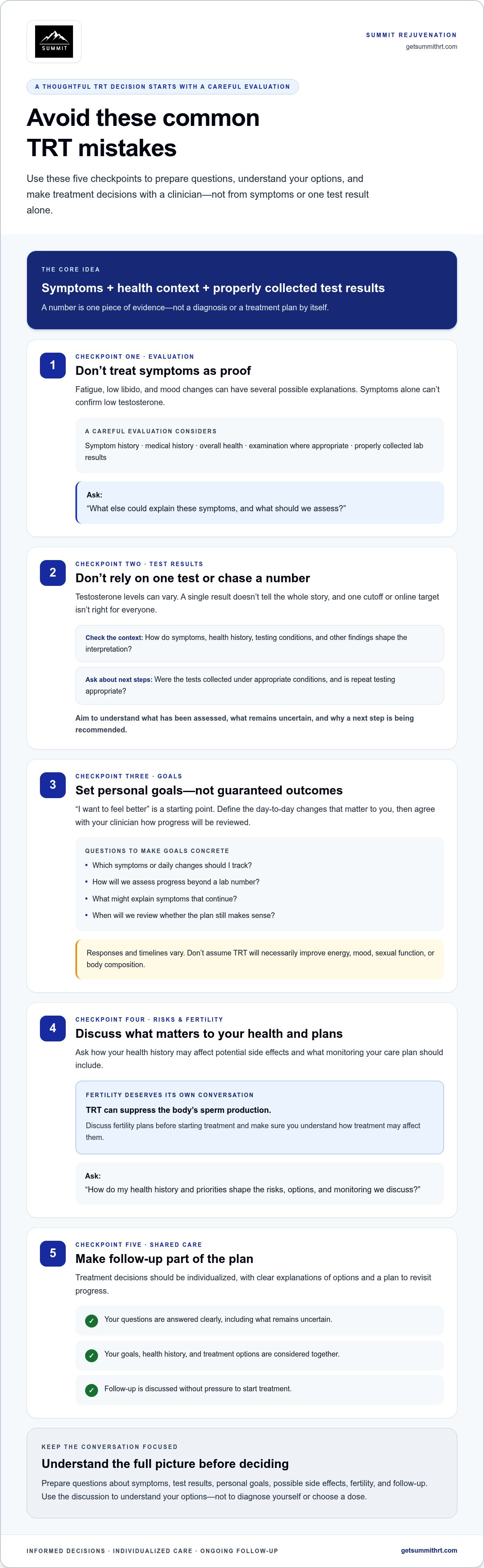
Use this TRT checklist to review treatment and follow-up
Starting treatment is not the finish line. Follow-up gives you and your clinician a chance to review how you’re responding, discuss concerns, and interpret relevant test results. The treating clinician should tailor the monitoring plan and testing schedule to your health and treatment context, rather than relying on someone else’s routine.
Mistake: skipping follow-up or changing treatment alone
Don’t change your dose or schedule, add another treatment, or stop prescribed TRT without first speaking with your clinician. Changes made without guidance can make it harder to understand your response and manage potential concerns. Keep a brief record of symptoms, questions, side effects, and treatment changes you’ve discussed. Bring it to appointments to keep the conversation focused.
Use this checklist to prepare for treatment reviews:
Review your goals. Note which day-to-day changes matter to you and whether they’ve shifted since your last visit.
Share updates. Tell your clinician about symptoms, concerns, side effects, and changes in your health or priorities.
Understand your results. Ask what relevant test results show and how they inform the current plan.
Confirm next steps. Clarify the follow-up plan, which tests may be appropriate, and when to discuss progress again.
Know how to reach your clinician. Ask how to report a concern or discuss a possible treatment change between appointments.
Questions to bring to a TRT appointment
A short list can help you leave with clearer answers. Consider asking:
What does my evaluation show, and what other explanations should we consider?
Which potential benefits and risks are most relevant to my situation?
What monitoring do you recommend for me, and why?
How should we assess whether the plan is helping?
Who should I contact if I notice a side effect or have a concern before my next appointment?
For broader background on treatment approaches and decisions, review this TRT therapy guide. One way to avoid common mistakes to avoid on TRT is to treat follow-up as an ongoing conversation, not a box to check. If you’re looking for men’s TRT supported by individualized planning and bloodwork analysis, explore Summit Rejuvenation’s TRT care.
Choose TRT care that makes informed decisions a shared process
Good TRT care should leave you better informed, not rushed. Look for a clinician who explains how your symptoms, medical history, and test results shape their recommendation, discusses options in terms you understand, and welcomes questions. You should also know how your plan will be reviewed and who to contact with concerns. No clinic format or provider can guarantee a particular outcome, but clear communication can help you make decisions with a fuller understanding of your options.
Signs a TRT care process deserves closer questions
Pause and ask for clarification if recommendations aren’t connected to your evaluation, your concerns are brushed aside, or you feel pushed to start before you understand the plan. Ask who will answer follow-up questions, how progress will be reviewed, and what to do if your health or priorities change. These questions don’t mean you’re rejecting treatment. They help you assess whether the care process supports informed, individualized decisions.
How to take your next step with confidence
Before a consultation, write down your health history, current concerns, goals, and questions. Bring prior test results if available, and note any fertility considerations or other health priorities you want to discuss. You don’t need to arrive certain that TRT is right for you. A thoughtful consultation can help clarify whether treatment may be appropriate and what further evaluation or discussion is needed.
Summit Rejuvenation offers men’s TRT with comprehensive bloodwork analysis, personalized treatment planning, and telehealth consultations. Telehealth is a consultation option, not a substitute for appropriate medical evaluation. Ask how your evaluation informs recommendations and what follow-up may involve. These steps can help you avoid common mistakes to avoid on TRT, including choosing treatment before you understand the reasoning behind it.
If you’re ready to learn more about the care process, explore Summit Rejuvenation’s TRT care. Bring your questions, take the time you need to understand your options, and make the decision in partnership with a clinician.
Make your next TRT decision with clarity
Common mistakes to avoid on TRT often come down to moving too quickly: treating symptoms as a diagnosis, expecting guaranteed results, or skipping conversations about fertility, risks, and follow-up. A careful evaluation, goals based on what matters in your daily life, and ongoing communication with a clinician can help you make a more informed decision.
You don’t have to figure it all out alone, and you don’t need to commit before your questions are answered. Summit Rejuvenation offers men’s hormone therapy supported by comprehensive bloodwork analysis, personalized treatment planning, and telehealth consultations. These are options to explore as part of an appropriate medical evaluation and a discussion about your individual needs.
Explore Summit Rejuvenation’s TRT care and bring your questions to the conversation. With clear information and a clinician who takes time to understand your priorities, you can approach the next step with greater confidence.
Frequently Asked Questions
What is the most common mistake to avoid when starting TRT?
A common mistake is treating symptoms or one test result as proof that TRT is needed. Fatigue, low libido, and mood changes can have several possible causes, so a clinician should assess symptoms alongside appropriate testing and your health history. Before considering treatment, ask what the evaluation shows, whether other explanations should be explored, and how your goals and health risks will factor into the decision.
Can you start TRT based on one testosterone test?
Usually, one testosterone test alone isn’t enough to establish a diagnosis. Clinicians generally assess compatible symptoms and confirm low levels with at least two separate early-morning tests, interpreted in context. Testing conditions and personal health history also matter. Ask your clinician how and when testing should be done, what the results mean for you, and whether further evaluation is needed before discussing treatment.
Does TRT affect fertility?
Yes. Testosterone taken as treatment can suppress the body’s natural testosterone and sperm production, which may affect fertility. If you’re considering having children now or in the future, discuss your plans with a clinician before starting TRT and ask what options may be appropriate for your goals. If you already use TRT and your plans change, talk with your prescriber before changing or stopping treatment.
Should you stop TRT if you notice a side effect?
Don’t stop or change your prescribed TRT without contacting your prescribing clinician. Report the side effect, when it started, how severe it is, and whether anything has changed in your treatment. Your clinician can advise whether you need assessment or a change to your plan. If symptoms feel severe or urgent, seek appropriate urgent medical care rather than waiting for a routine follow-up.
How often should you get bloodwork while on TRT?
There isn’t one testing schedule that fits every person using TRT. Your clinician should set the timing and type of bloodwork based on your health, treatment, test results, and response. Ask which markers will be checked, when testing is recommended, and how the results will guide follow-up. Keep scheduled monitoring appointments, and contact your clinician if you have concerns between tests or visits.
Is it a mistake to focus only on testosterone levels during TRT?
Yes, focusing only on testosterone levels can overlook symptoms, treatment goals, side effects, and other relevant health markers. Lab results help inform care, but they don’t show by themselves whether treatment is meeting your personal needs or whether monitoring should change. Discuss how your clinician will assess your overall response, interpret results in context, and review concerns alongside your agreed goals.
Can you adjust your TRT dose without talking to your clinician?
No. Don’t adjust your dose or treatment schedule without guidance from the clinician managing your TRT. Changing treatment on your own can make it harder to interpret lab results, understand your response, or address side effects safely. If you feel your dose isn’t working as expected or you’re experiencing a concern, record what’s happening and ask your clinician how to proceed.


Comments