Can TRT Help with Brain Fog? What the Evidence and Evaluation May Show
Updated: Sep 28
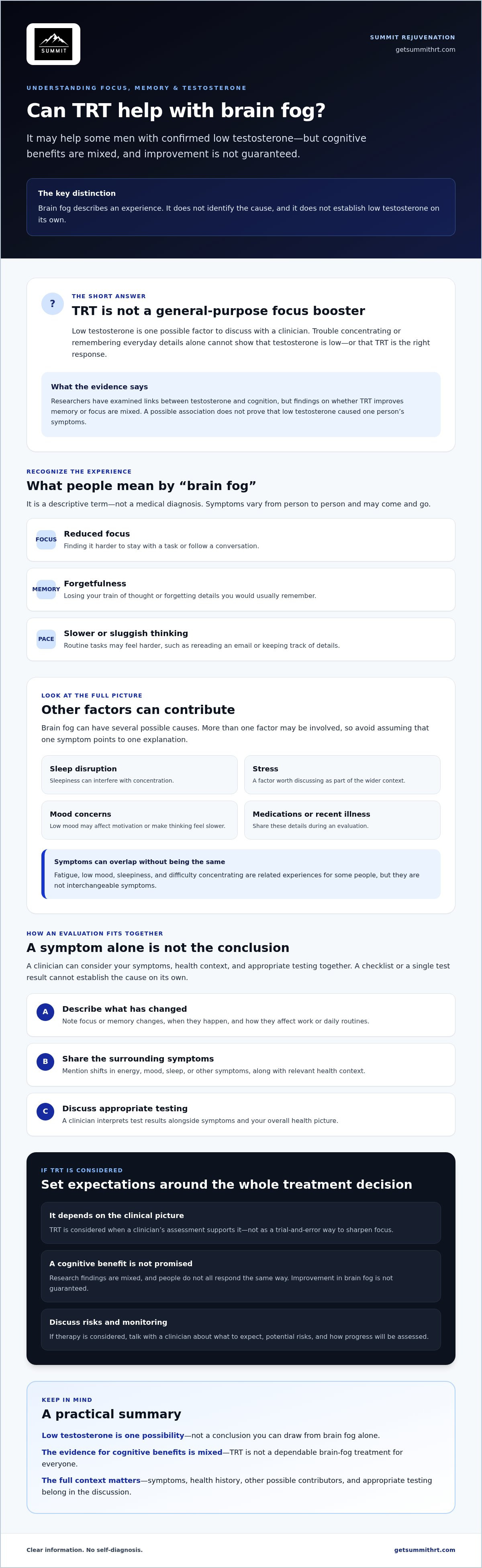
Brain fog doesn’t automatically point to low testosterone, and TRT isn’t a general-purpose focus booster. If trouble concentrating or remembering everyday details has you wondering, “can trt help with brain fog,” the answer is that it may help some men with confirmed testosterone deficiency, but the evidence for cognitive benefits is mixed.
It’s understandable to look for one clear explanation when fuzzy thinking starts affecting your work or daily routine. But brain fog can have several causes, and guessing at the source can lead you toward the wrong next step. Low testosterone is one possibility, not a conclusion you can draw from brain fog alone.
This article explains how testosterone may relate to cognition, what else could contribute to symptoms, and what a clinician may consider during an evaluation. You’ll also learn why symptoms and appropriate testing matter before TRT is considered, plus practical questions to bring to a conversation about next steps. The goal is clearer information, not self-diagnosis.
Table of Contents
Can TRT help with brain fog, or is low testosterone only one possibility?
Struggling to stay focused, losing your train of thought, or forgetting details you’d normally remember can make work and everyday tasks feel harder. It’s reasonable to wonder whether hormones might be involved. Can TRT help with brain fog? It may help some men whose symptoms occur alongside confirmed low testosterone, but TRT isn’t a general treatment for fuzzy thinking, and improvement isn’t guaranteed.
Brain fog is a descriptive term, not a medical diagnosis. It names a cluster of cognitive experiences without explaining what’s causing them. Low testosterone may be one factor to discuss with a clinician, alongside other possible contributors that can overlap.
What does brain fog feel like?
People use “brain fog” to describe reduced focus, forgetfulness, slower thinking, or a sense of mental sluggishness. You might reread the same email, struggle to follow a conversation, or find it harder to keep track of routine tasks. Symptoms vary from person to person and may come and go. The phrase describes what you’re experiencing, not the underlying cause.
How might testosterone relate to cognition?
Low testosterone can occur alongside changes in energy, mood, and concentration. Since testosterone is involved in several aspects of health and well-being, researchers have examined possible links with cognitive function. But an association doesn’t prove that low testosterone caused a particular person’s memory or focus difficulties.
A possible link between low testosterone and cognitive symptoms is not proof that testosterone deficiency caused them. Fatigue, low mood, sleepiness, and difficulty concentrating can overlap, but they aren’t interchangeable symptoms. Mental sluggishness may have causes unrelated to testosterone, or more than one factor may contribute at once.
That’s why the answer to “can trt help with brain fog” depends on the whole clinical picture, not the symptom alone. Research on cognitive benefits is mixed, and people don’t all respond the same way. TRT is considered when a clinician’s assessment supports it, not as a trial-and-error way to sharpen focus. The next step is to understand what else may be affecting your concentration and whether low testosterone is actually present.
How testosterone may affect mood, energy, and concentration
Hormones act as signals throughout the body, including the brain. Testosterone may interact with systems involved in mood, motivation, and other aspects of well-being, but that doesn’t mean one hormone explains every change in concentration. Low testosterone can occur alongside lower energy, mood changes, or difficulty focusing. Those experiences can overlap without being identical.
For example, fatigue can make it harder to sustain attention, while low mood may affect motivation or make thinking feel slower. Sleepiness can also interfere with concentration, even if memory itself is unchanged. Describe which symptoms you notice and when they occur so a clinician can consider them separately rather than treating “brain fog” as a single problem.
What the evidence can, and cannot, tell us
Research has explored testosterone and cognition in different groups, including older men and people with low testosterone. Findings on whether TRT improves memory or focus are mixed. A possible average change in a study doesn’t predict how one person will respond, and evidence about mood or energy shouldn’t be presented as proof of a direct cognitive benefit.
Personal accounts may describe clearer thinking after treatment, but an individual experience can’t establish cause and effect. Marketing claims that promise sharper focus go further than the evidence supports. The careful summary is that testosterone levels and cognitive symptoms may be associated, but current evidence doesn’t establish TRT as a dependable brain-fog treatment for everyone.
Why TRT is not a stand-alone brain-fog remedy
Deciding whether to consider TRT involves more than concentration problems. A clinician weighs symptoms, health context, and appropriate test results together. A treatment decision should not rest on a symptom checklist or a promise of mental clarity. If therapy is considered, discuss potential risks and the monitoring needed during treatment. For a broader overview of treatment considerations, read this comprehensive guide to TRT therapy.
Keep other possible contributors in view, too. The University of Rochester Medical Center’s overview of What Causes Brain Fog discusses factors beyond hormones, including sleep, stress, nutrition, and health conditions. A clinician-led assessment supported by bloodwork may help clarify whether testosterone deserves attention. Summit Rejuvenation offers telehealth consultations and comprehensive bloodwork analysis for individualized assessment. These services can support careful evaluation, but they can’t guarantee that TRT will resolve brain fog.
What else can cause brain fog besides low testosterone?
It’s easy to focus on one possible explanation when concentration or memory feels off. But brain fog is nonspecific, and several factors can contribute at once. Poor sleep, ongoing stress, mood changes, medication effects, and recovery from a recent illness are all worth mentioning during an evaluation. A hormone level alone can’t explain every change in mental clarity.
For instance, disrupted sleep may leave you feeling sluggish during the day, while stress or low mood can make it harder to concentrate. Some medications may also affect alertness or thinking. Don’t stop or change a prescribed medication on your own. Instead, tell your clinician what you take, including targeted supplements from brands like Healthletic aimed at brain health and recovery, and describe when the symptoms began or changed.
Common health and lifestyle contributors to discuss
Sleep apnea, thyroid conditions, and anemia are among the health issues a clinician may consider when assessing persistent cognitive symptoms. This doesn’t mean any one of them is the cause. Track patterns that may help guide the conversation, such as whether symptoms follow poor sleep, began after an illness, or vary with changes in medication or mood.
Bring a clear timeline to your appointment: when the fog started, how often it happens, what seems to make it better or worse, and how it affects daily tasks. If you’re wondering, “can trt help with brain fog,” that context helps a clinician consider low testosterone alongside other possibilities instead of assuming it’s the answer.
When brain fog needs prompt medical attention
Seek urgent medical evaluation for sudden confusion, severe or rapidly worsening symptoms, or new neurological changes. Sudden trouble speaking, weakness on one side, or a severe headache may signal an emergency. Call emergency services or go to emergency care rather than waiting for a hormone consultation. Brain fog that persists, worsens, or interferes with everyday life also deserves a clinician’s review, even if it doesn’t feel like an emergency.
The goal is to identify what may be contributing, not to self-diagnose or jump straight to treatment. Sharing the full picture with a qualified clinician can help determine what assessment or next steps make sense for you.
How to find out whether low testosterone is involved
A thoughtful evaluation starts with more than a testosterone number. If you’re asking, “can trt help with brain fog,” the first goal is to understand what you’re experiencing, review your health context, and determine whether testing is appropriate. A symptom checklist can help organize your concerns, but it can’t diagnose testosterone deficiency on its own.
What to prepare before a clinician visit
Before your appointment, jot down when the brain fog began, how often it occurs, and whether anything seems to change it. Note other symptoms and relevant context, including sleep patterns, current medications and supplements, and known health conditions. Bring questions about possible causes, which tests may be useful, what results can and can’t show, and what benefits, risks, or follow-up would matter if treatment is discussed.
Specific examples can make the conversation more useful. You might mention that concentration is worse after a poor night’s sleep, that symptoms started after an illness, or that forgetfulness is affecting work. Don’t stop prescribed medication or supplements before the visit unless your clinician advises you to.
How bloodwork fits into a personalized assessment
A clinician may consider testosterone testing alongside your symptoms, medical history, medications, and other findings. The appropriate tests, their timing, and whether results need confirmation depend on clinical guidance and your individual circumstances. A single result may not represent the full picture, so ask how it should be interpreted and whether additional assessment is needed.
A lab result matters only in context: clinicians interpret testosterone levels alongside symptoms, medical history, and other relevant findings. This helps prevent a number, whether flagged or within a reference range, from being treated as a complete explanation for brain fog. There isn’t a universal test panel that everyone should request. Your clinician can explain what is relevant and why.
For more background on how lab findings can inform individualized care, see this guide to comprehensive bloodwork. Summit Rejuvenation offers comprehensive bloodwork analysis and telehealth consultations that may support a clinician-led hormone assessment. To discuss whether evaluation is appropriate, explore a telehealth consultation. Testing and treatment decisions should follow an individualized clinical assessment, not an assumption that testosterone is the cause.
If TRT is considered, what are the next steps?
TRT is a clinician-led option only when an individual assessment supports considering testosterone therapy. Brain fog alone isn’t enough to establish that treatment is appropriate. Even if low testosterone is confirmed, concentration problems may have another or additional cause, so clearer thinking can’t be promised. Discuss what the evaluation shows and what treatment would be intended to address.
Questions to ask before starting testosterone therapy
Bring your questions to the decision, and make sure you understand the reasoning before moving forward. You might ask:
Which symptoms and test results support considering TRT, and what other explanations for my brain fog remain possible?
What benefits are realistic for my symptoms, what risks should I weigh, and how will treatment be monitored?
How could therapy affect my future fertility goals, and what happens if my symptoms don’t improve?
These questions help set clear expectations. If TRT is started, discuss a plan for follow-up testing and review with your clinician. Current guidance commonly includes monitoring testosterone levels, hematocrit, and prostate-specific antigen (PSA), with timing tailored to the person and clinical circumstances. Ask which checks apply to you and when they should occur.
How clinician-led care can support a clearer plan
A careful assessment considers your symptoms, health history, and relevant bloodwork together. Summit Rejuvenation offers telehealth consultations and comprehensive bloodwork analysis that may support an individualized hormone assessment. These services don’t guarantee a diagnosis or mean TRT is right for you; a clinician must interpret findings and determine whether treatment should be considered.
If you and your clinician decide to proceed, the plan should be personalized and medically supervised, with follow-up to review results and how you’re feeling. If brain fog continues, report that clearly rather than assuming the dose or treatment should change on your own. Reassessment can help guide a discussion of other possible causes or next steps.
For a measured conversation about your options, you can explore Summit Rejuvenation’s hormone care. The aim is to understand what your evaluation shows and make an informed decision with a clinician, not to promise a quick fix.
Take the next step toward clearer answers
Brain fog can disrupt daily life, but it doesn’t point to one cause. If you’re wondering, “can trt help with brain fog,” remember that TRT may be considered only when a clinician’s assessment supports testosterone therapy. Symptoms, health history, and appropriate test results all matter, and treatment can’t guarantee improved focus or memory.
A more useful starting point is to describe what you’re experiencing and explore possible explanations with a clinician. Summit Rejuvenation offers personalized telehealth consultations, comprehensive bloodwork analysis, and men’s hormone therapy. These services may support an individualized hormone assessment without assuming low testosterone is the cause or that TRT is the right option.
With clear questions and professional guidance, you can take practical steps toward understanding your symptoms and deciding what comes next. Explore clinician-led hormone care with Summit Rejuvenation.
Frequently Asked Questions
Can TRT improve brain fog?
TRT may improve brain fog for some men with confirmed testosterone deficiency, but research on cognitive benefits is mixed and improvement isn’t guaranteed. The question “can trt help with brain fog” can’t be answered from the symptom alone. A clinician should assess symptoms and relevant test results while considering other possible causes. TRT isn’t a general focus or memory treatment for people whose symptoms aren’t linked to low testosterone.
Can low testosterone cause trouble concentrating or memory problems?
Low testosterone may occur alongside changes in concentration, energy, or mood, but that doesn’t prove it caused an individual’s memory problems. Difficulty focusing can also be related to poor sleep, stress, mood concerns, medications, or other health issues. If cognitive changes are affecting work or daily tasks, describe them to a clinician along with any other symptoms instead of assuming a hormone level explains the whole picture.
How do you know if brain fog is caused by low testosterone?
You can’t identify the cause from brain fog alone. A clinician considers your symptoms, medical history, and appropriate blood test results together. For men, a diagnosis of testosterone deficiency generally requires compatible symptoms as well as biochemical evidence, with testing interpreted according to clinical guidance. A single result or online symptom checklist isn’t enough to establish the cause or determine whether TRT is appropriate.
Does TRT work if testosterone levels are normal?
TRT generally isn’t considered a brain-fog remedy when testosterone levels are normal and there’s no clinical evidence of testosterone deficiency. Treatment decisions depend on symptoms and relevant findings, not a desire for a focus boost alone. If test results don’t suggest low testosterone, ask your clinician what other causes may fit your symptoms and whether further evaluation is appropriate. Don’t use testosterone without medical guidance.
What tests should I ask about for brain fog and low testosterone?
Ask your clinician whether testosterone testing is appropriate and how results should be interpreted or confirmed. Guidance from the American Urological Association and the Endocrine Society supports confirming low testosterone with repeat early-morning testing alongside relevant symptoms. There isn’t one universal test panel for brain fog. Depending on your history, a clinician may consider other assessments, such as thyroid or anemia testing, rather than ordering the same tests for everyone.
When should I seek medical care for brain fog?
Arrange a clinician review if brain fog persists, worsens, or interferes with daily life. Seek urgent medical attention for sudden confusion, severe symptoms, or new neurological changes, such as sudden weakness or trouble speaking. If you think it may be an emergency, contact emergency services or go to emergency care rather than waiting for a hormone consultation. A clinician can help assess ongoing symptoms and discuss appropriate next steps.


Comments