Anastrozole Dosage for TRT: What to Know in 2026
A higher estradiol result doesn’t automatically mean you need anastrozole. The right anastrozole dosage for TRT isn’t a number to copy from an online forum: there’s no one-size-fits-all dose, and using the medication to manage estrogen during TRT is off-label.
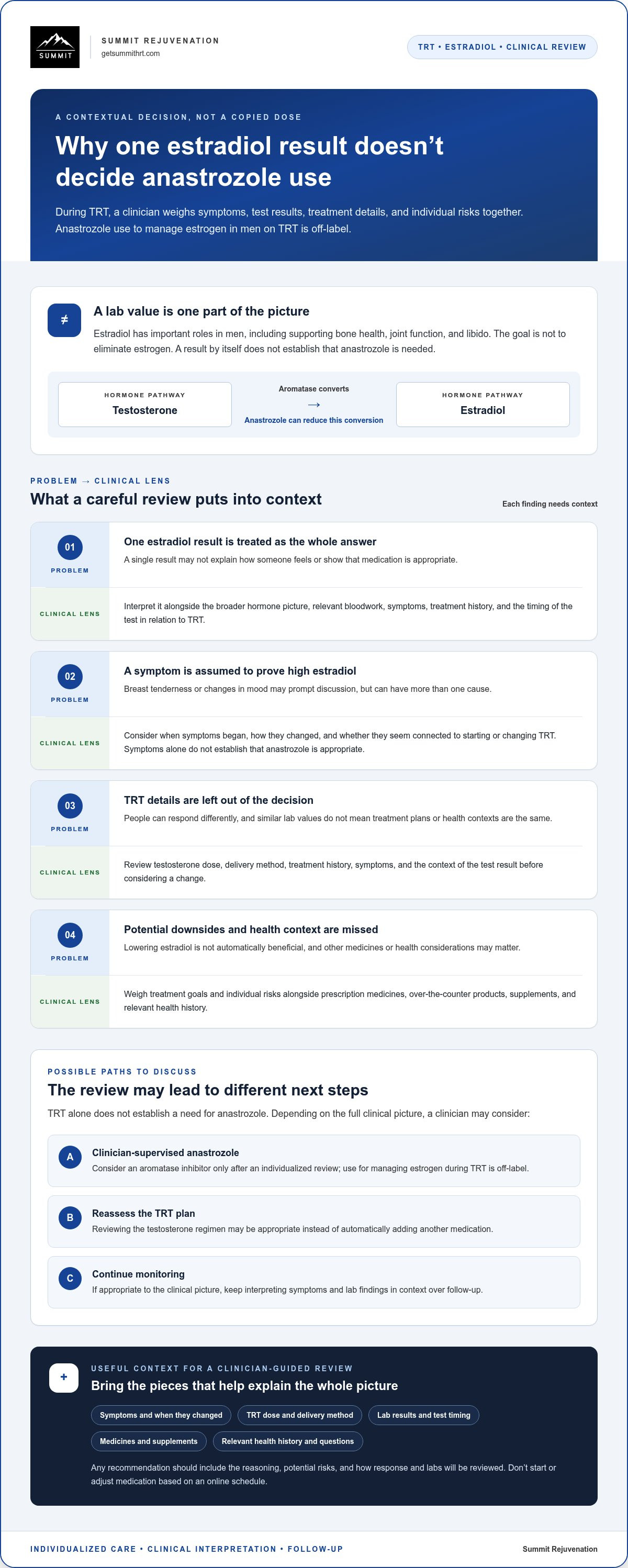
If conflicting advice has left you unsure, that’s understandable. Estrogen plays important roles in men’s health, so the goal isn’t to eliminate it. Instead, a clinician considers the full picture: your symptoms, hormone test results, testosterone regimen, and potential risks. One lab value may not tell the whole story.
This guide explains why a clinician might consider anastrozole alongside TRT, what factors can shape an individualized decision, and why follow-up matters. You’ll also learn about possible side effects and alternatives, including whether a change to your TRT plan may be appropriate. Comprehensive bloodwork and a clinician-guided review can help you prepare focused questions about your care.
Table of Contents
Anastrozole dosage for TRT: why there is no one-size-fits-all amount
Looking for a specific number is understandable, especially when online advice makes dosing sound simple. But a general discussion of anastrozole dosage for TRT cannot determine what’s appropriate for you. A dosing discussion explains how clinicians may think about treatment; an individualized medical order applies that judgment to one person’s symptoms, test results, and health history. Don’t use an online schedule to start or adjust medication.
Anastrozole is an aromatase inhibitor. In men, the aromatase enzyme converts some testosterone into estradiol, a form of estrogen. Anastrozole can reduce this conversion and lower estradiol. Its use to manage estrogen in men receiving TRT is off-label, meaning it’s outside the medication’s FDA-approved use. You can read a general overview of Anastrozole, including its mechanism of action and approved uses.
What does anastrozole do during testosterone therapy?
Estradiol isn’t simply an unwanted by-product. Men need it for functions that include supporting bone health, joint function, and libido. The goal of care isn’t to eliminate estrogen, but to assess whether symptoms and clinical findings suggest a concern worth addressing. Because anastrozole changes hormone pathways, its use calls for clinician oversight, not trial and error.
Why can’t one TRT anastrozole dose fit everyone?
People respond differently to testosterone therapy. Treatment history, symptoms, other medicines, health considerations, and laboratory findings can all affect the decision. A clinician may consider estradiol results alongside the broader hormone picture and the timing of the test in relation to treatment. One result by itself may not explain how someone feels or establish that anastrozole is needed.
For example, two people on TRT may have different symptoms and hormone results. Even if a lab value appears similar, their treatment plans and health contexts may differ. That’s why a number shared online can’t substitute for a personalized review. A clinician can assess whether a result is meaningful, consider the potential downsides of lowering estradiol, and decide whether a change warrants follow-up.
TRT alone doesn’t establish a need for anastrozole. Some people may need a closer review of symptoms and labs; others may be better served by reassessing their TRT plan or continuing to monitor, depending on the clinical picture. Comprehensive bloodwork can inform that conversation, but results should be interpreted in light of your history and treatment goals. The next step is an individualized assessment, not a dose copied from someone else.
How clinicians assess whether anastrozole belongs in a TRT plan
A careful review follows a sequence rather than relying on one symptom or lab value. A clinician considers what you’re experiencing, how you’re using TRT, what relevant tests show, your health context, and how any plan will be followed up. This helps distinguish a finding to monitor from one that may call for a change.
Lab results require clinical interpretation alongside symptoms and treatment history. An estradiol result is one part of the picture, not a diagnosis on its own. Symptoms that may prompt discussion, such as breast tenderness or changes in mood, can have more than one cause. They don’t prove that estradiol is high or that anastrozole is appropriate.
Which symptoms and treatment details may matter?
Share when symptoms began, how they’ve changed, and whether they seem connected to starting or changing TRT. A clinician may also review your testosterone dose, delivery method, and treatment history. These details help put symptoms and lab findings in context instead of treating them as automatic reasons to add medication.
Bring an accurate list of prescription medicines, over-the-counter products, and supplements, along with relevant health history. This gives the clinician a fuller basis for weighing potential benefits and risks. Research into anastrozole for men can involve different circumstances. For example, research on anastrozole discusses male infertility, which is a different clinical question from managing hormone levels during TRT.
How do estradiol tests inform the discussion?
Testing can help clarify the hormone picture, but the appropriate test and its interpretation depend on the individual situation. Your clinician may consider the result alongside other relevant bloodwork, symptoms, treatment details, and health risks. If results and symptoms don’t seem to align, discuss the context and whether further evaluation is useful. Don’t make a medication decision based on a number alone.
Because TRT details shape how results are understood, a broader overview of TRT treatment and monitoring can help you prepare for that conversation. A clinician-guided review supported by comprehensive bloodwork can connect test results with your treatment history and goals. If you’re considering anastrozole dosage for TRT, use the review to understand the reasoning behind any recommendation, including possible risks and follow-up, rather than looking for a universal target dose.
Anastrozole with TRT versus adjusting treatment or monitoring
Anastrozole isn’t an automatic add-on to testosterone therapy, and lowering estradiol isn’t a goal for every man. Estrogen has important functions in men, so the decision depends on the full clinical picture: symptoms, test results, treatment goals, and individual health risks. A clinician may consider medication, review the TRT plan, or continue monitoring if appropriate.
When might a clinician review the TRT plan first?
Before adding another medication, a clinician may look at how you’re using TRT and whether the current plan fits your symptoms, test results, and goals. That review can clarify whether a treatment change, additional evaluation, or continued observation makes sense. Don’t change your testosterone dose, timing, or delivery method on your own. Those decisions need to account for your individual response and medical context.
What are the trade-offs of adding an aromatase inhibitor?
Anastrozole may be considered to lower estradiol when a clinician believes the clinical picture warrants it. But reducing estrogen too far may be a concern, since estradiol supports bone health and other functions. Possible effects can include joint or bone pain and hot flashes. The MedlinePlus anastrozole information describes potential adverse effects, though experiences can vary and information from its approved use may not predict an individual man’s response during TRT.
Feeling better after a treatment change matters, but perceived improvement alone doesn’t establish that an approach is safest or most suitable long term. A clinician can consider both symptom response and follow-up findings when reviewing the plan. A bloodwork-informed TRT review can help you understand the options and trade-offs. Explore clinician-guided TRT care as a starting point for a personalized discussion about treatment context.
What to expect from monitoring and follow-up during TRT
Follow-up connects how you feel with what your test results show and how your treatment is progressing. There isn’t one internet schedule that suits everyone. Your treating clinician determines which tests are relevant and when to review them, based on your treatment, health context, and any medication changes. Comprehensive bloodwork can support that individualized review, but it can’t guarantee a particular result.
What should a follow-up conversation cover?
A little preparation makes the conversation more useful. Keep notes on symptoms, when they occur, and any treatment changes since your last review. Bring an up-to-date list of prescribed medicines and supplements, and mention possible side effects, even if they seem minor. These details help your clinician interpret changes in the context of your full treatment picture.
A follow-up may move through these steps:
Review symptoms: Discuss what has changed, what has stayed the same, and how symptoms affect daily life.
Assess relevant labs: Review the hormone tests and other bloodwork your clinician considers appropriate.
Discuss your response: Consider symptoms, medication use, test findings, and treatment goals together.
Plan reassessment: Agree on next steps and when another review or test may be appropriate.
Ask how your clinician will judge whether the current approach is helping and what findings would prompt another review. If you’re discussing anastrozole dosage for TRT, don’t change or stop prescribed medication on your own. Report new or worsening symptoms so your clinician can advise you based on your circumstances.
When should a patient seek prompt medical advice?
Contact your treating clinician promptly about symptoms that are concerning, unexpected, or getting worse, rather than waiting for a routine follow-up. If symptoms feel urgent or severe, use emergency services instead of waiting for a routine telehealth appointment. This general guidance can’t assess an individual emergency; seek immediate help when you believe urgent care is needed.
For a bloodwork-informed review of your TRT and follow-up questions, connect with Summit Rejuvenation. A clinician-guided conversation can put symptoms, treatment history, and relevant test results in context and clarify appropriate next steps.
Discussing anastrozole dosage for TRT with a clinician
A productive consultation starts with the full picture, not a dose found online. Bring clear notes and ask how the clinician would weigh your symptoms, test results, treatment history, goals, and health considerations. The aim is an informed, individualized decision, whether that means discussing medication, reviewing your TRT plan, or continuing to monitor.
Questions to bring to a TRT consultation
Use this short checklist to prepare. You don’t need to have every answer; the details can guide the conversation.
Symptoms: Note what you’re experiencing, when it started, and whether it has changed.
Treatment history: Bring details about your TRT, including changes you’ve made and how you’ve responded.
Medicines and supplements: List what you currently take, including nonprescription products.
Labs: Bring available test results and note when they were taken in relation to your treatment, if known.
Personal questions: Ask what findings support considering anastrozole in your case, what benefits and risks apply to you, and what alternatives may be appropriate.
Before making a decision, ask how symptoms and lab results will be reviewed over time, what monitoring would involve, and what might prompt the plan to be reassessed. These questions keep the focus on your care rather than a universal target dose. The phrase anastrozole dosage for TRT may lead to many online numbers, but none can replace a clinician’s assessment of your individual situation.
How Summit Rejuvenation supports personalized hormone care
Summit Rejuvenation provides men’s TRT through telehealth, with comprehensive bloodwork to inform personalized treatment planning and ongoing hormone care. A clinician-guided review can put symptoms and lab findings in context without assuming that a specific medication or outcome is right for everyone.
For broader background, explore the TRT therapy guide and the Summit Rejuvenation care overview. When you’re ready to discuss your hormone care, explore Summit’s telehealth care as a next step.
Make your next TRT decision with clarity
The key takeaway is simple: there’s no universal anastrozole dosage for TRT, and being on testosterone therapy doesn’t automatically mean you need an aromatase inhibitor. Symptoms, lab results, treatment history, and personal health risks all matter. The goal is to understand the full picture with a clinician, not copy a dose from an online discussion.
Bring your questions, medication history, symptoms, and available lab results to the conversation. Comprehensive bloodwork can inform personalized treatment planning, while follow-up gives you and your clinician a chance to review how your care is going. Summit Rejuvenation provides men’s hormone care through telehealth across the United States.
Ready to take a thoughtful next step? Explore personalized TRT and hormone care with Summit Rejuvenation. With the right context and professional guidance, you can move forward feeling more informed and confident.
Frequently Asked Questions
What is a typical anastrozole dosage for TRT?
There’s no standard anastrozole dosage for TRT. Some clinical discussions describe low starting amounts, such as 0.25 to 1 mg taken one to three times weekly, but these figures aren’t a personal recommendation or a schedule to follow. Whether to use anastrozole, and at what dose and frequency, depends on an individual’s symptoms, test results, treatment context, and medical risks. Don’t start or adjust it without your clinician’s direction.
Does everyone on TRT need anastrozole?
No. Taking testosterone doesn’t automatically mean you need anastrozole, which lowers estradiol by reducing its production from testosterone. Estradiol has important functions in men, so suppressing it simply because you’re on TRT isn’t usually the goal. A clinician considers symptoms, relevant lab results, treatment history, and health risks to decide whether medication, a TRT-plan review, or continued monitoring is appropriate.
Can anastrozole be taken with testosterone?
A clinician may prescribe anastrozole alongside testosterone in some circumstances, but the combination isn’t appropriate for everyone and requires medical oversight. The decision should account for why estradiol is being evaluated, your symptoms and hormone results, other medicines, and your broader health history. If both medications are prescribed, follow the plan you were given and attend recommended follow-up. Don’t add anastrozole or change either medication on your own.
What happens if estradiol becomes too low on TRT?
Estradiol that’s too low may contribute to problems such as joint discomfort, reduced libido, or bone-health concerns. Symptoms alone can’t confirm that estradiol is low, since similar issues may have other causes. If you notice new or worsening symptoms while taking anastrozole, tell your clinician rather than changing the dose yourself. They can assess your symptoms and relevant bloodwork in the context of your TRT and overall health.
How often should estradiol be checked when taking anastrozole with TRT?
There isn’t one testing schedule that applies to everyone. A clinician chooses when to check estradiol and other relevant labs based on your treatment, symptoms, health context, and whether your plan has changed. Testing may be more frequent while treatment is being adjusted and less frequent once it’s stable, but your clinician should set the timing. Ask which tests you need, when to complete them, and how results will guide follow-up.
Can I adjust my anastrozole dose based on symptoms?
No. Don’t change your anastrozole dose based on symptoms without speaking with your clinician. Symptoms can have multiple causes, and how you feel alone can’t confirm your estradiol level or show whether a dose change is appropriate. Keep track of new or changing symptoms, when they occur, and any medication changes, then share those details at follow-up. Your clinician can decide whether to review your treatment or arrange relevant testing.
Is anastrozole FDA-approved for use with TRT?
No. Anastrozole is FDA-approved for treating certain types of breast cancer in postmenopausal women, not for managing estradiol in men receiving TRT. Prescribing it for this purpose is considered off-label, meaning the use differs from the FDA-approved indication. A clinician may consider off-label use based on individual circumstances, but it still calls for a clear rationale, discussion of potential risks, and appropriate follow-up.


Comments